
cad, design, and build theory
Firstly before getting started, almost everything is a tradeoff and some sort of compromise. You must clearly understand your goals and capabilities before beginning any project like this. What are you wanting to accomplish? What is your main priority? What skills and means do you have at your disposal?
Speed: Faster sounds better until you're going 16mph on what is basically a motorized recliner and hit a dog or a stump hole. Don't ask. More speed requires more stability, higher gearing, softer suspension, less darty programming, and more power. To get stability you need a longer wheelbase, wider track width, more caster trail, and more forward center of gravity. Higher gearing eats battery faster, creates more heat, and hurts slow speed maneuverability. More caster trail does the same. All of these characteristics are detrimental to indoor useability, long battery range, and some outdoor capability.
Outdoor capability: You'll need lower gearing and more power for hills and towing, fat wide tires for flotation on mud ad sand, more suspension travel, large od casters with shorter trail, more ground clearance, heavier duty build, wider stance, very responsive programming, and more weight for traction. Most of these characteristics hurt speed, indoor manners, and battery life.
Indoor capability: Narrower width, shorter wheelbase, lighter weight, hard skinny tires that don't mark hard floors or pull up carpet, smaller casters with a short trail, less height, lower gearing, tilt, smoother control programming, and lighter duty build. Now you have a chair that can take you from the kitchen to the living room to eat your supper while watching The Golden Girls comfortably but can't get you down the driveway to the mailbox.
Battery range: Long battery range requires a big battery, lower gearing, higher voltage, less amps, better wiring, proper battery care, brushless motors, efficient planetary gearboxes, and low rolling resistance. Any lead based battery chemistry is completely irrelevant at this point in history. They have been for 20 years. The only suitable battery chemistry currently available is lithium based LiFePO4. All of which are attributes that increase the cost, complexity, and difficulty of the design. More details on the battery page.
Now that the limitations of each goal are established, it's time to design around the compromises. Three separate chairs would be ideal: One for indoor and travel, one for outdoor fun, and one for outdoor work. This is not feasible if you're stuck in whatever you start the day in, which is typically the case for people in this market segment.
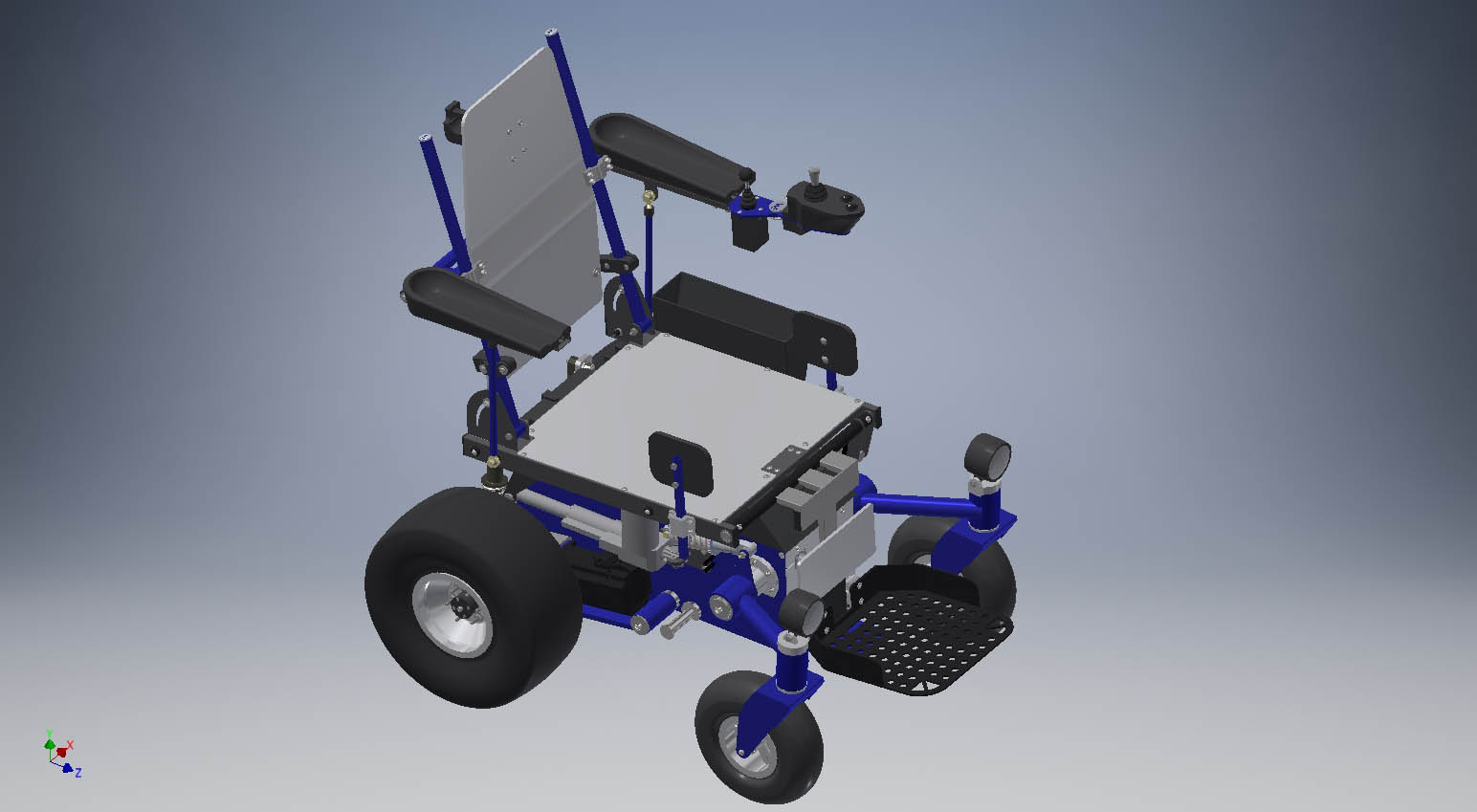
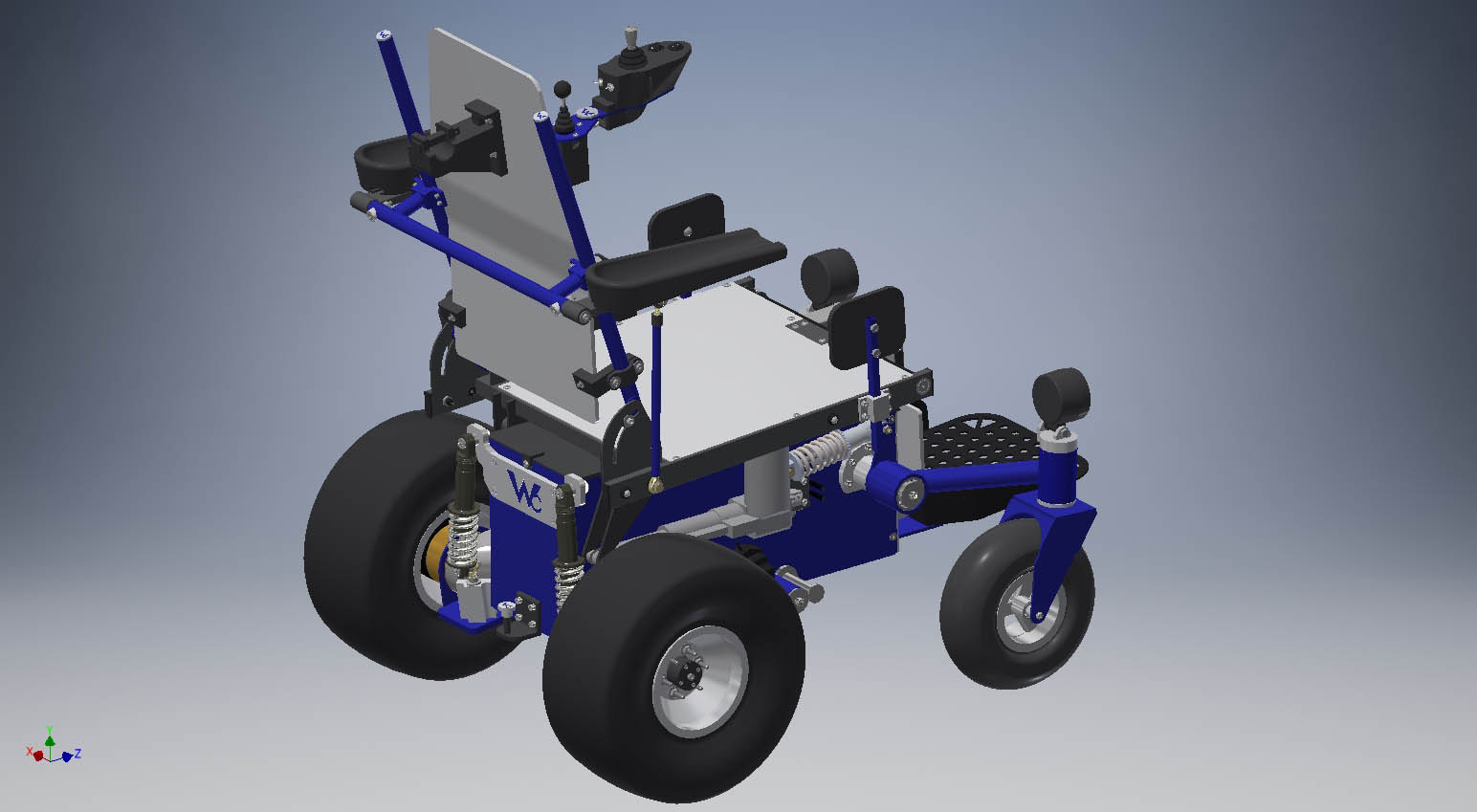
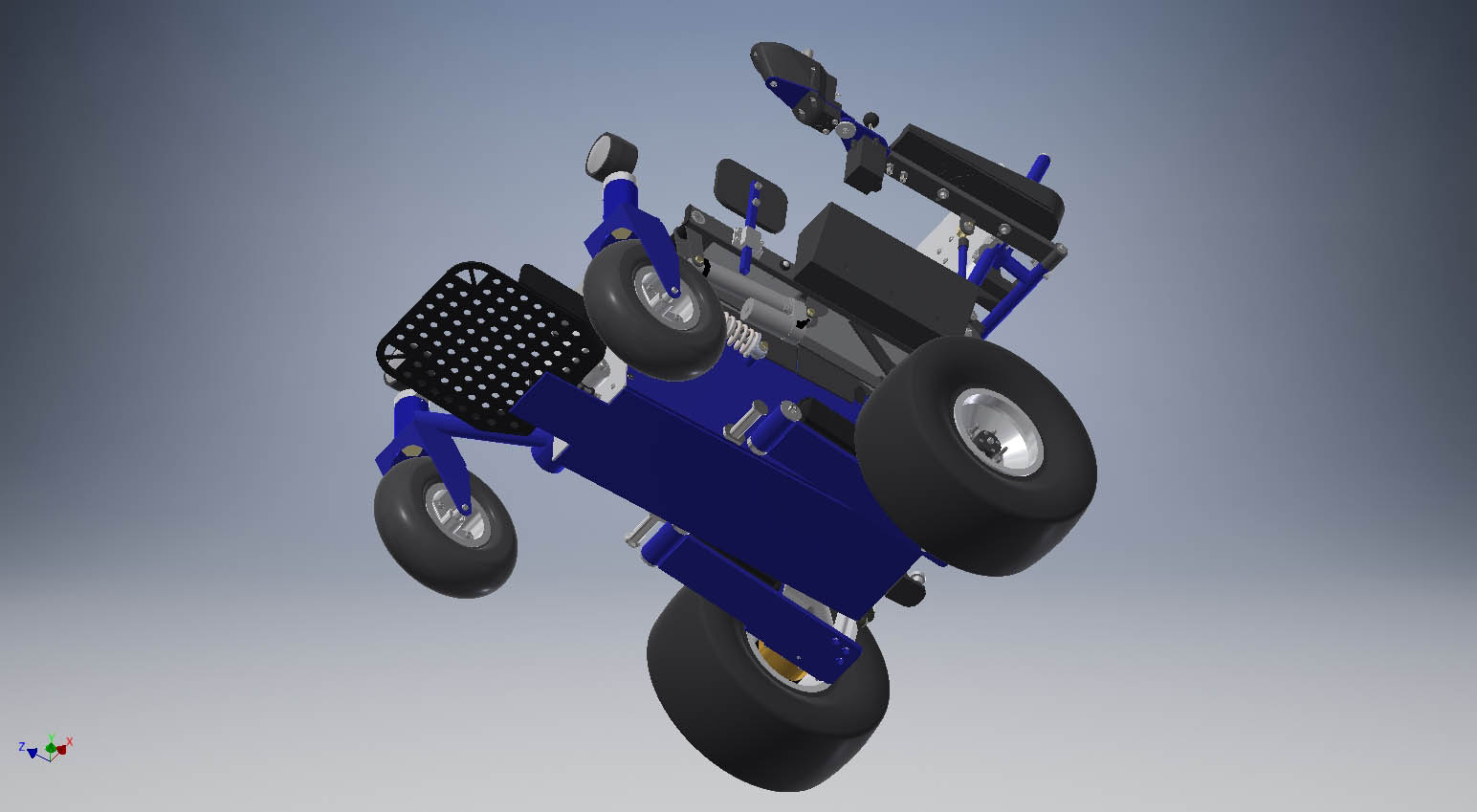
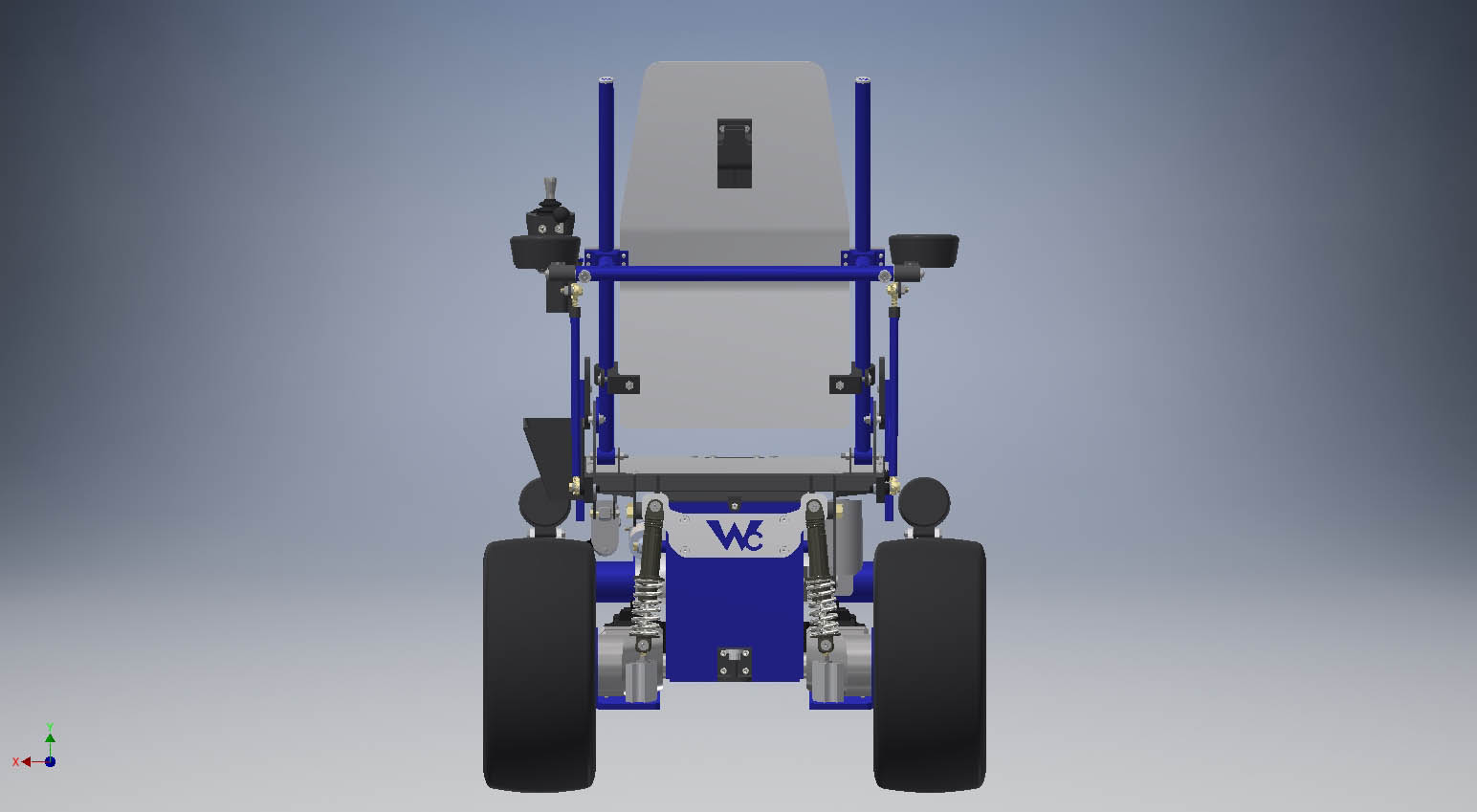
Designing around all of the constraints needed made finding off-the-shelf parts difficult. The chair must also fit in my truck so I can drive along with placement for the docking mechanism. Things like ground clearance must be estimated due to tire pressure and suspension settings.
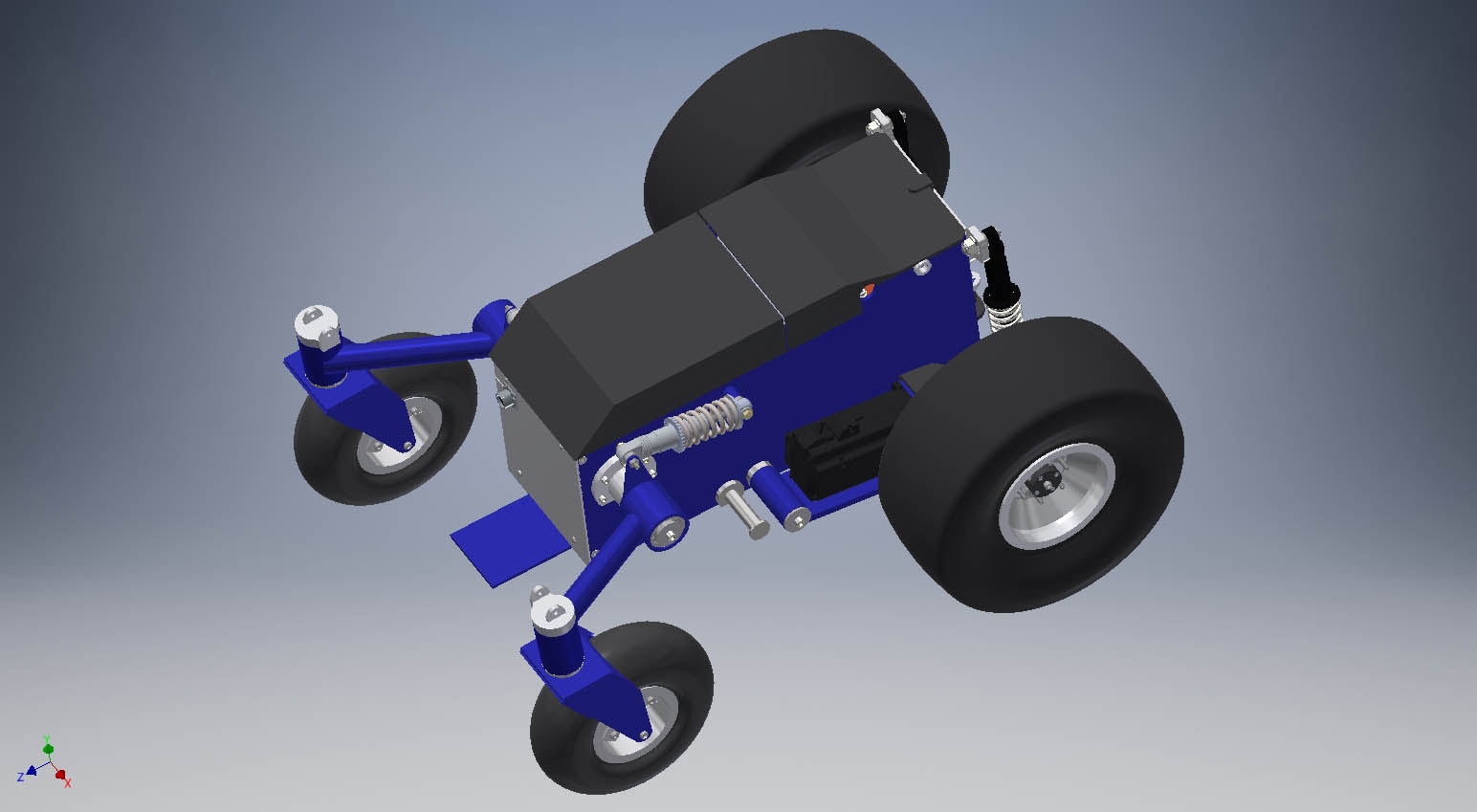
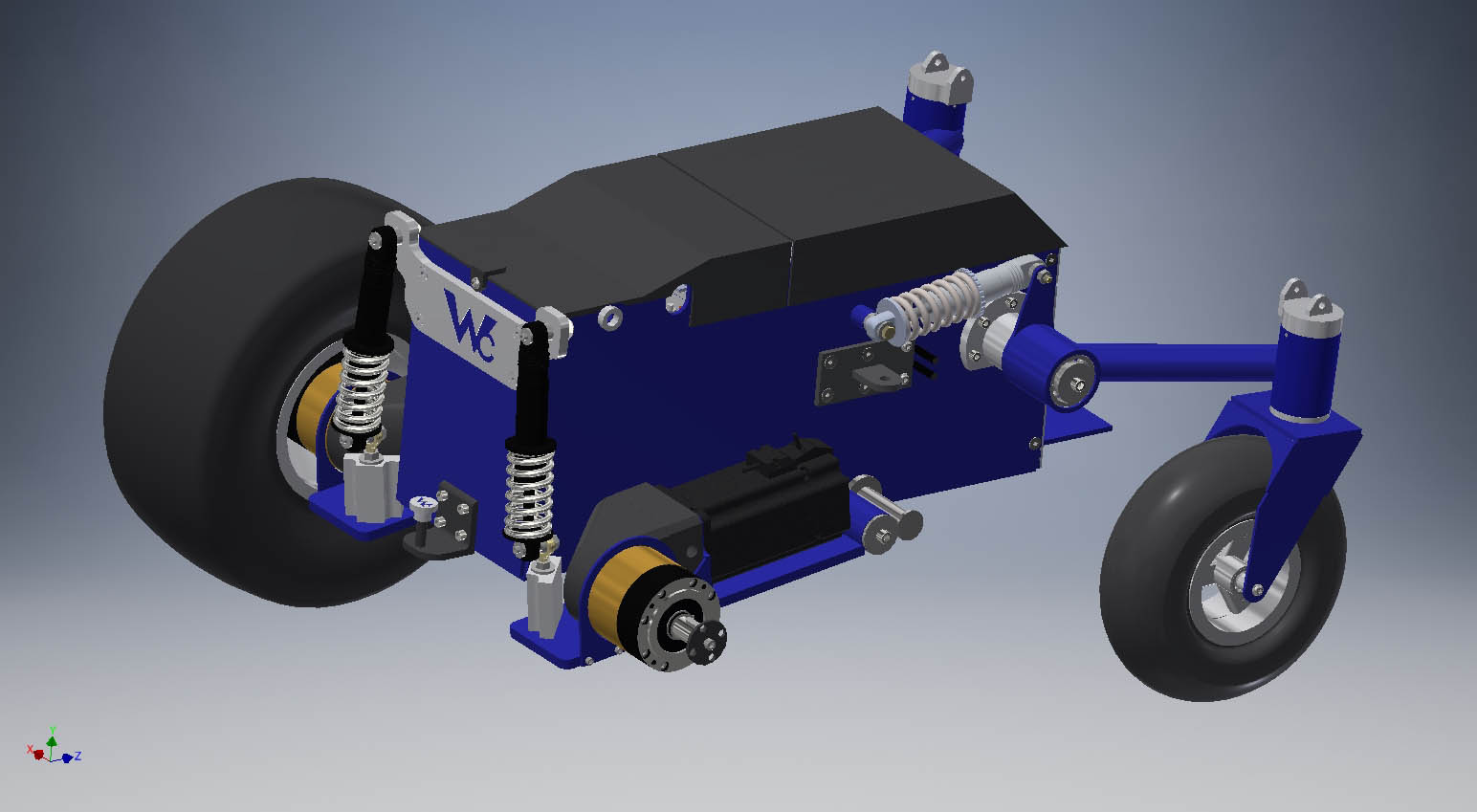
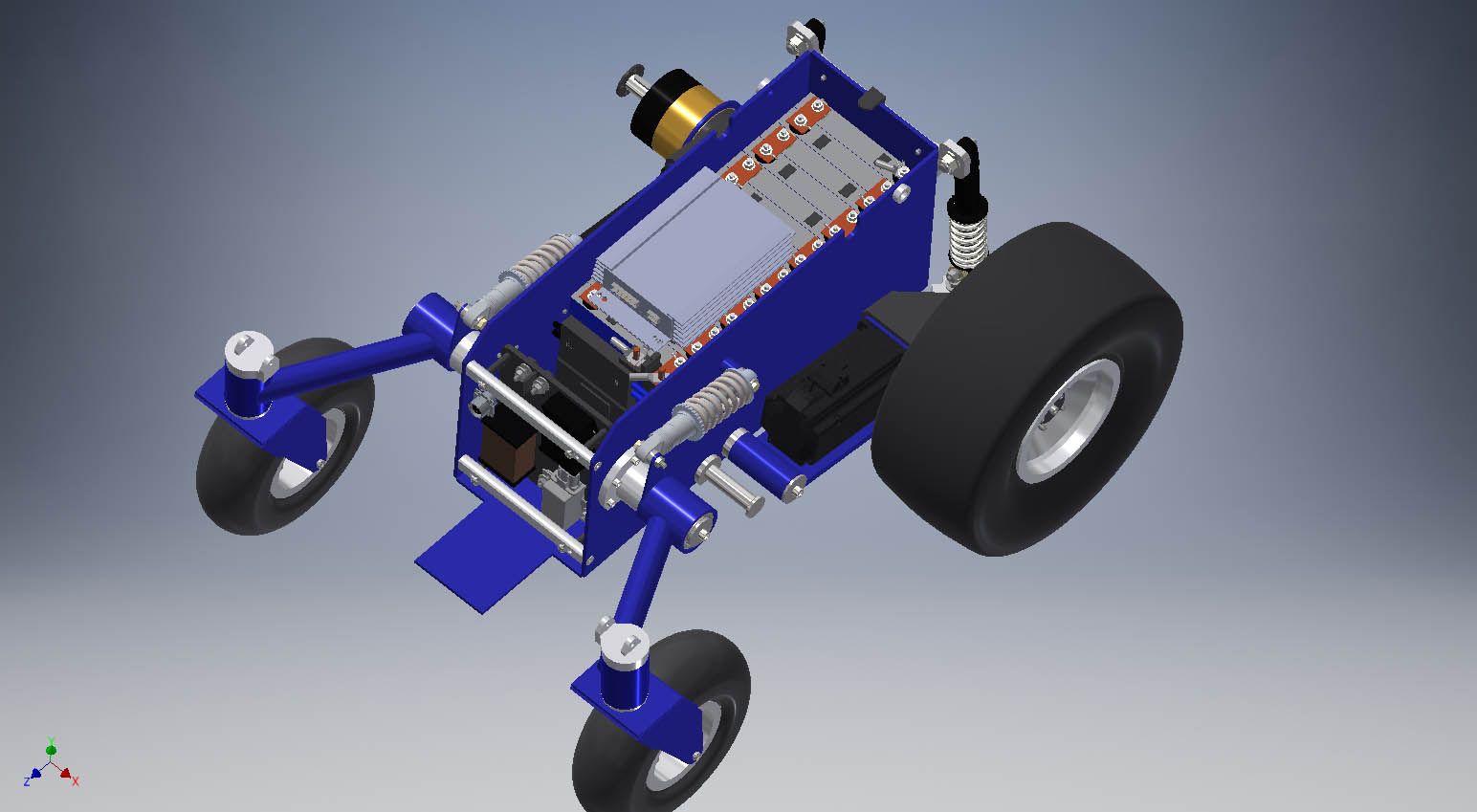
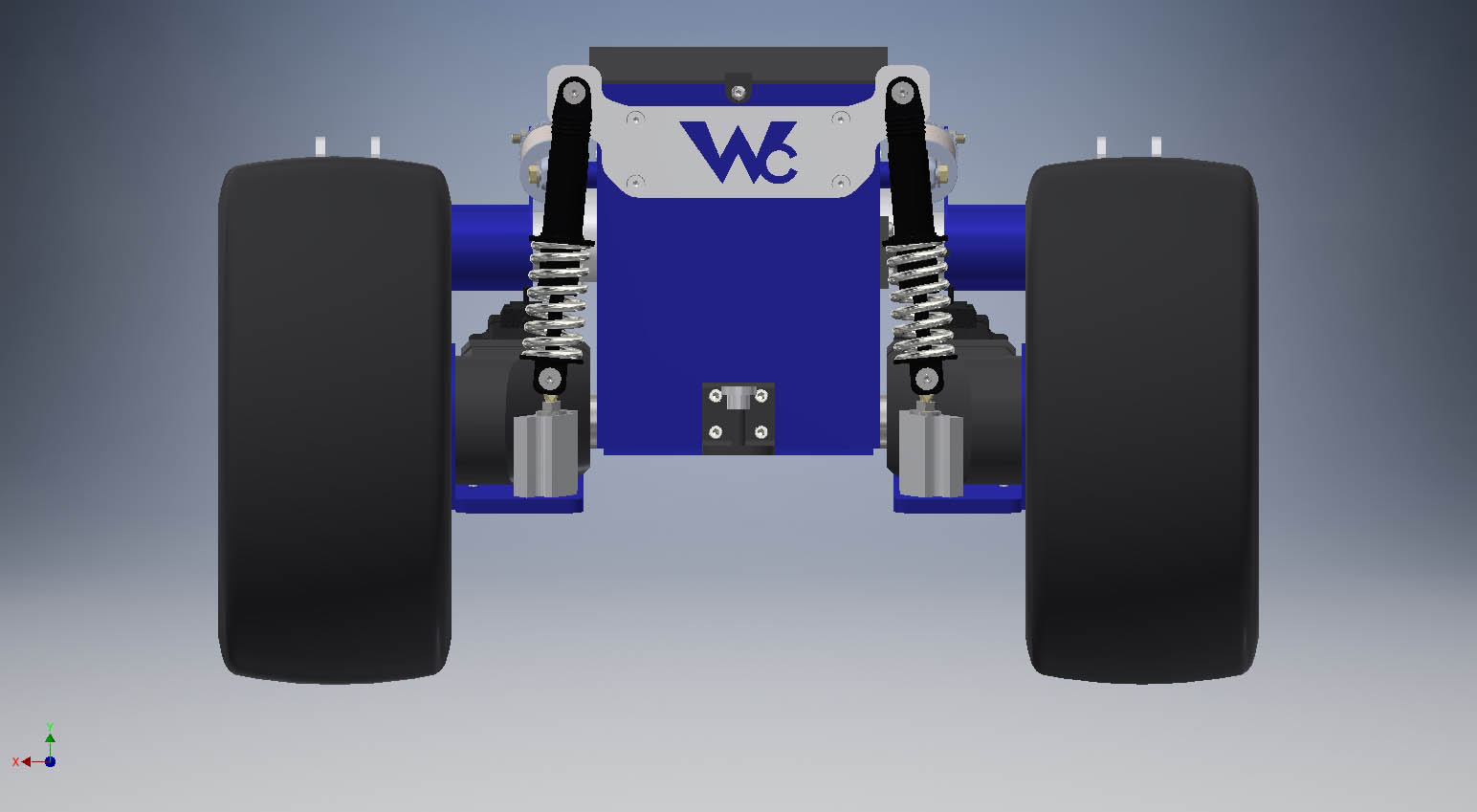
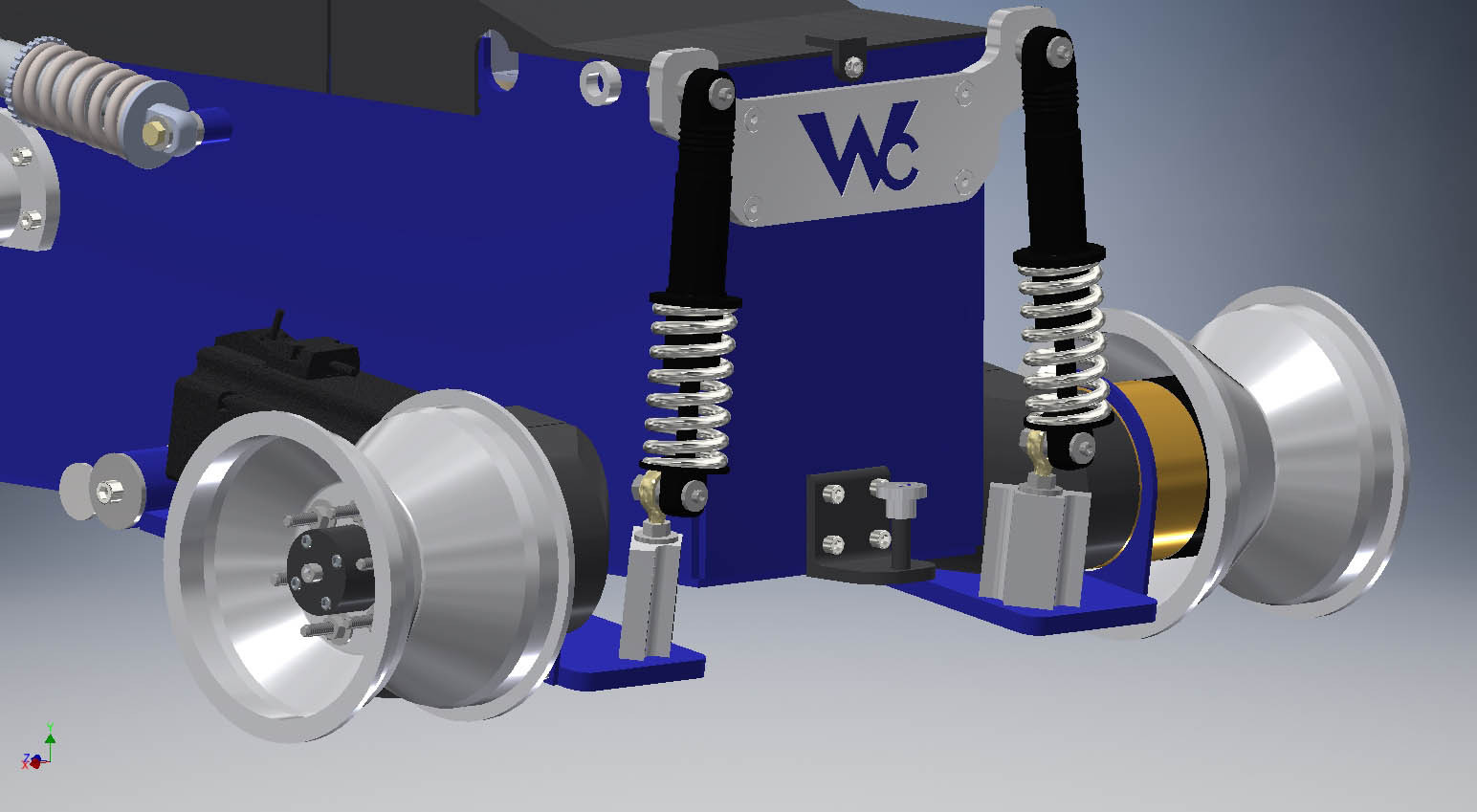
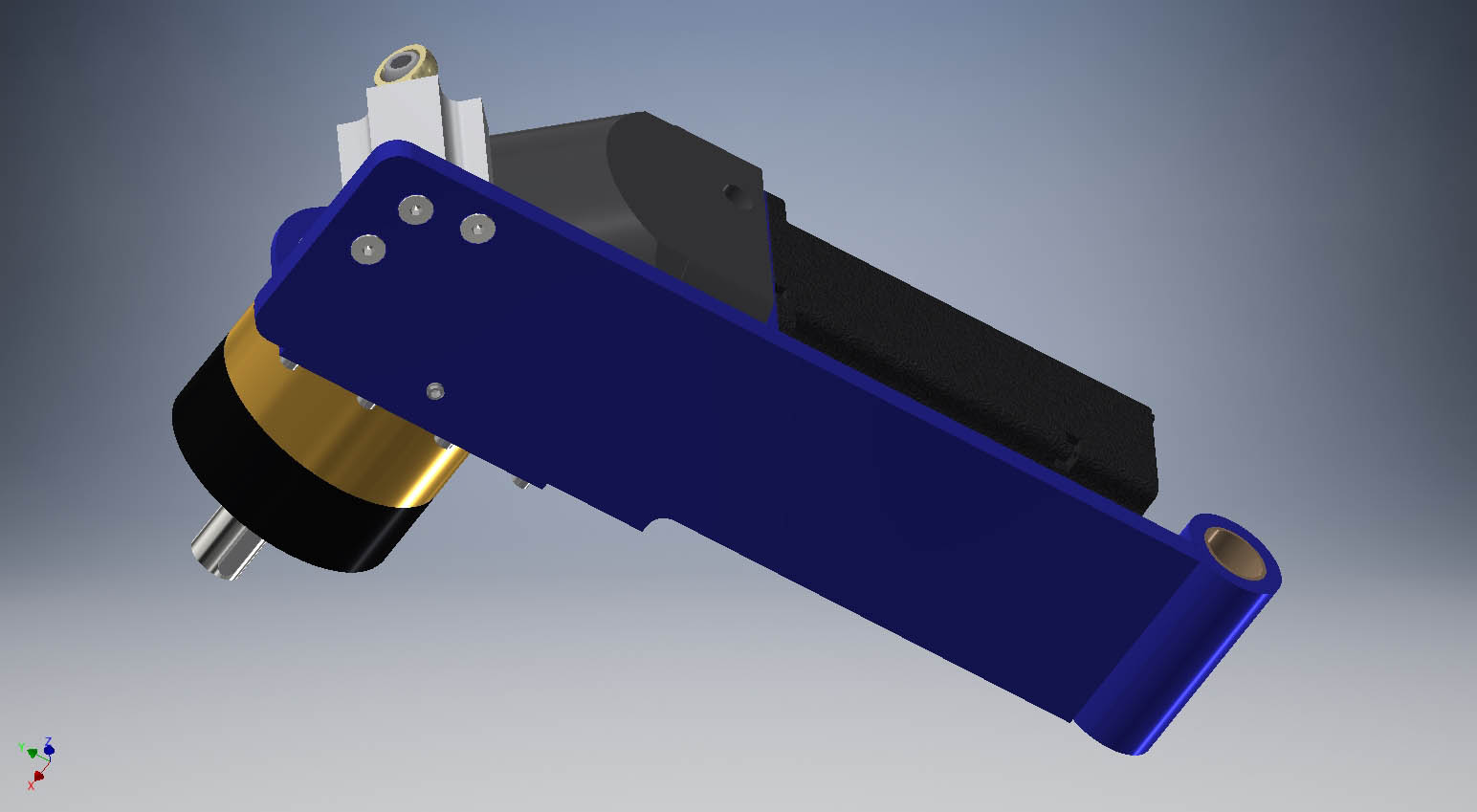
Most manufacturers of things like motors and gearboxes will typically provide you with a solid CAD file if you ask. Open source IGES or STEP files are preferred. They will rarely provide native CAD files from the design software such as Solidworks or Inventor. Always double check them once you have the part in your hand for discrepancies before proceeding with cutting metal. On the third chair I built I had to completely redesign and rebuild the blue parts you see below and shock mounts (not exactly like these but similar) because I made the parts based off of their supplied drawing while waiting on the custom wound motors to arrive. The motors were 1/2" longer than the drawing. They would not fit.
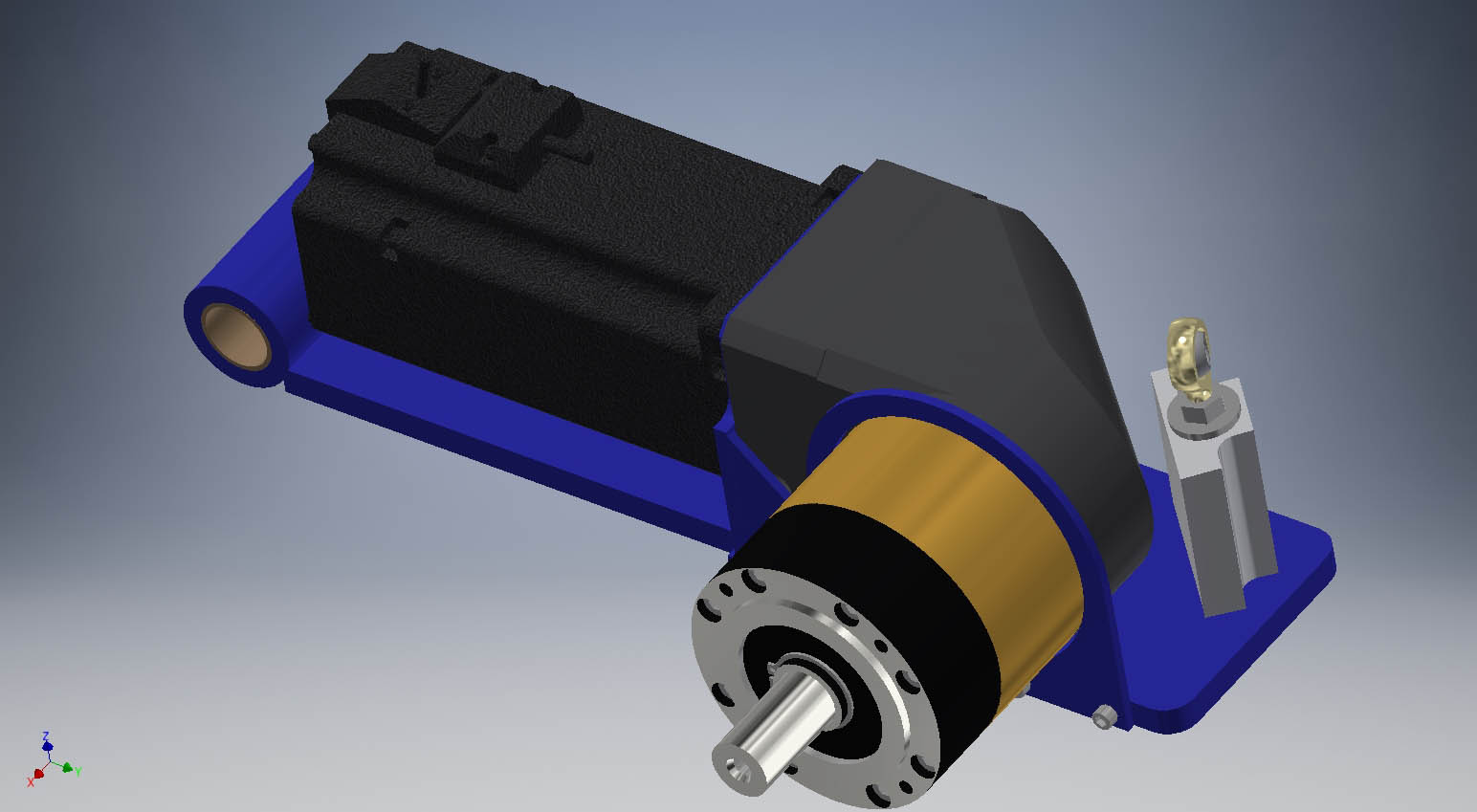
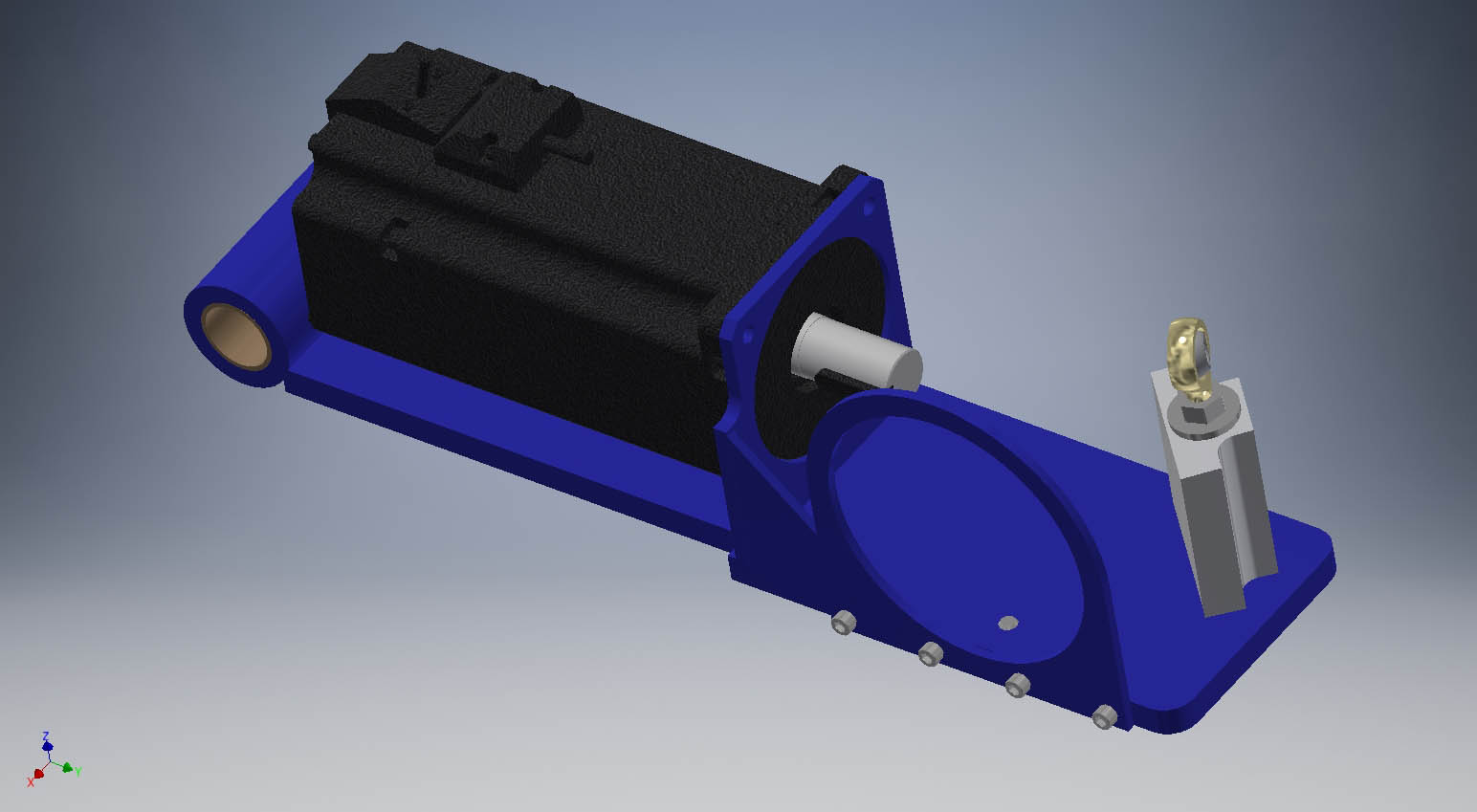
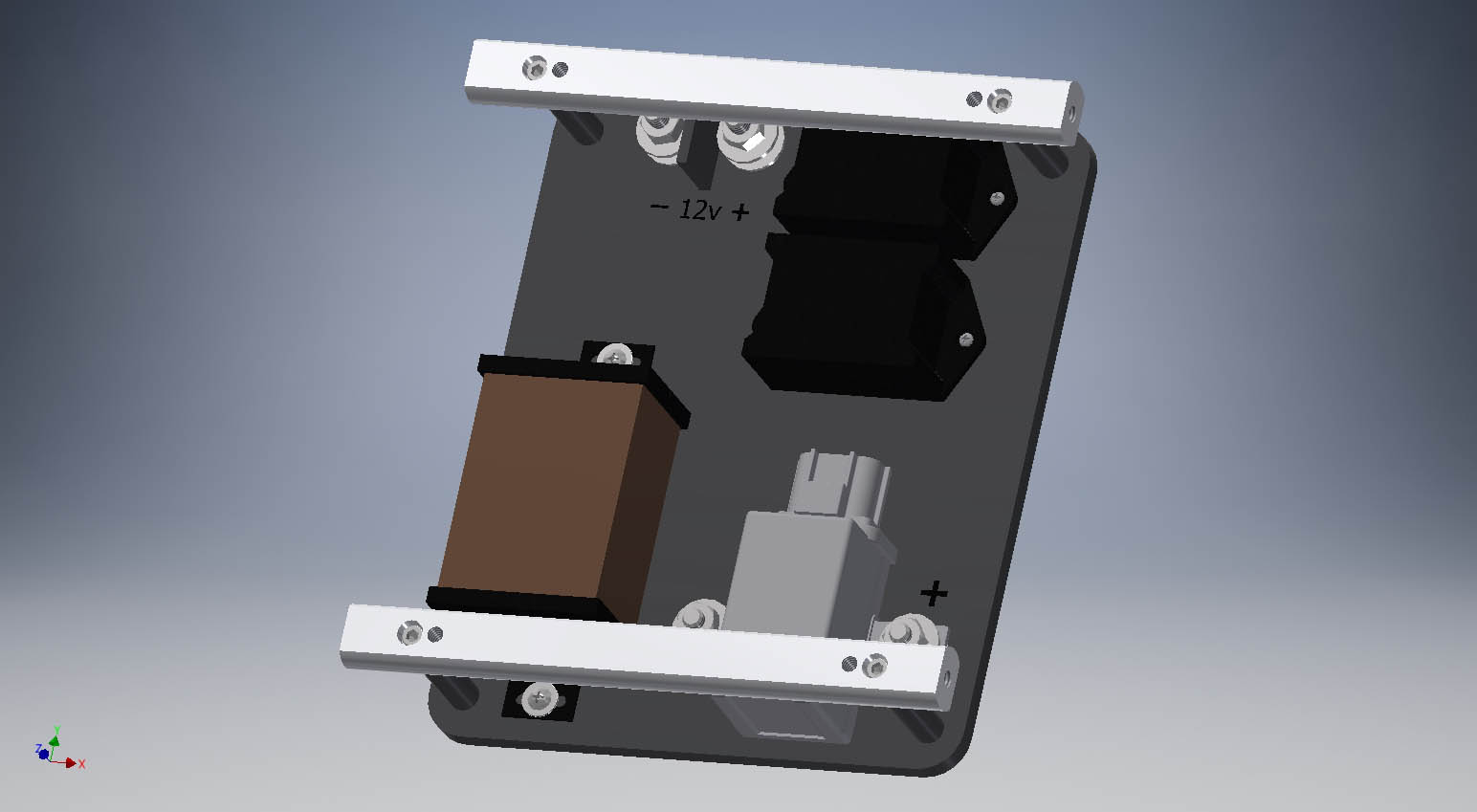
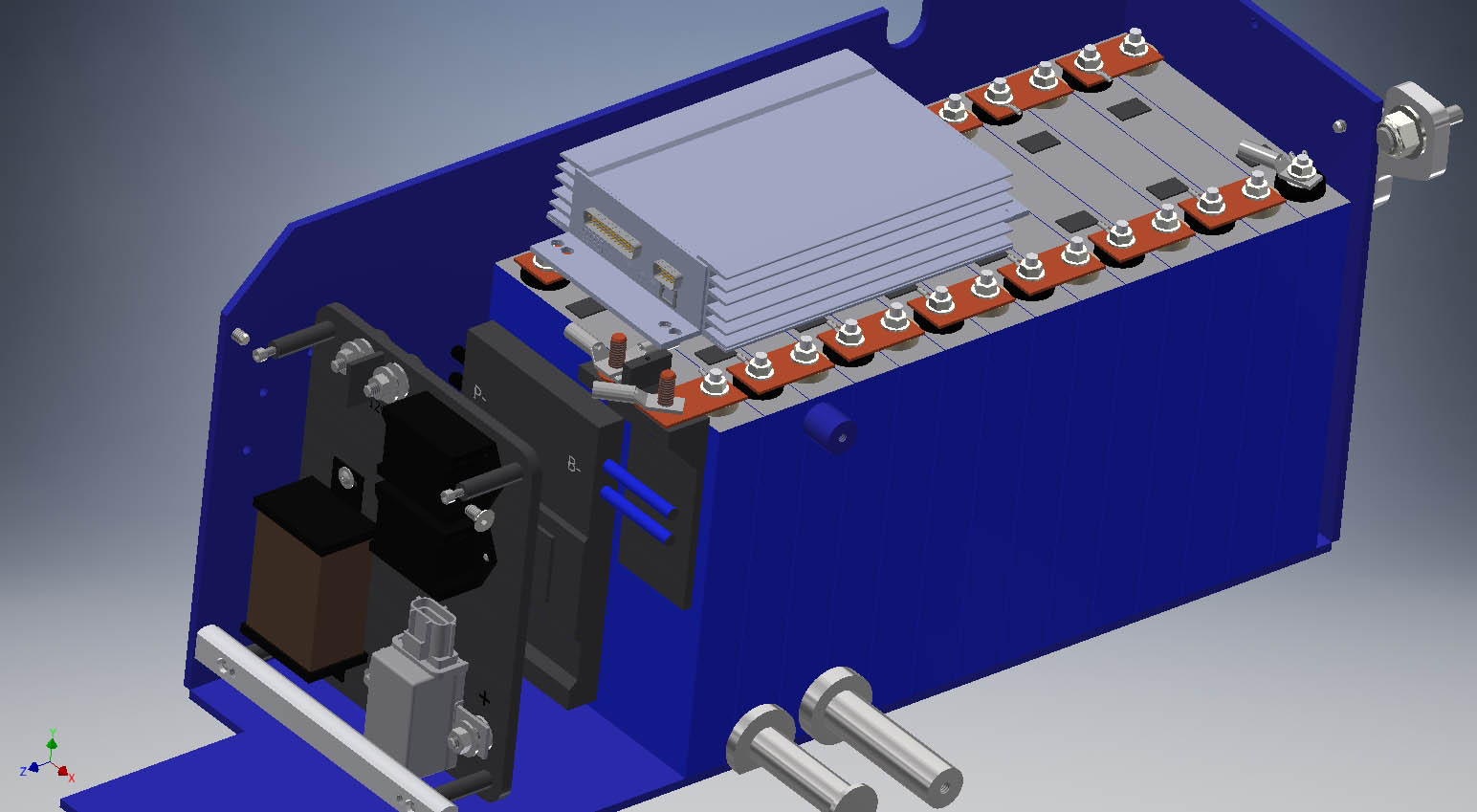
The basic electronic components were purchased then measured and modeled before building. This chair has a more robust and simpler electronics system then on previous builds. These main components shown here are the 48v to 12v converter, master/emergency disconnect, and two relays for the actuators.
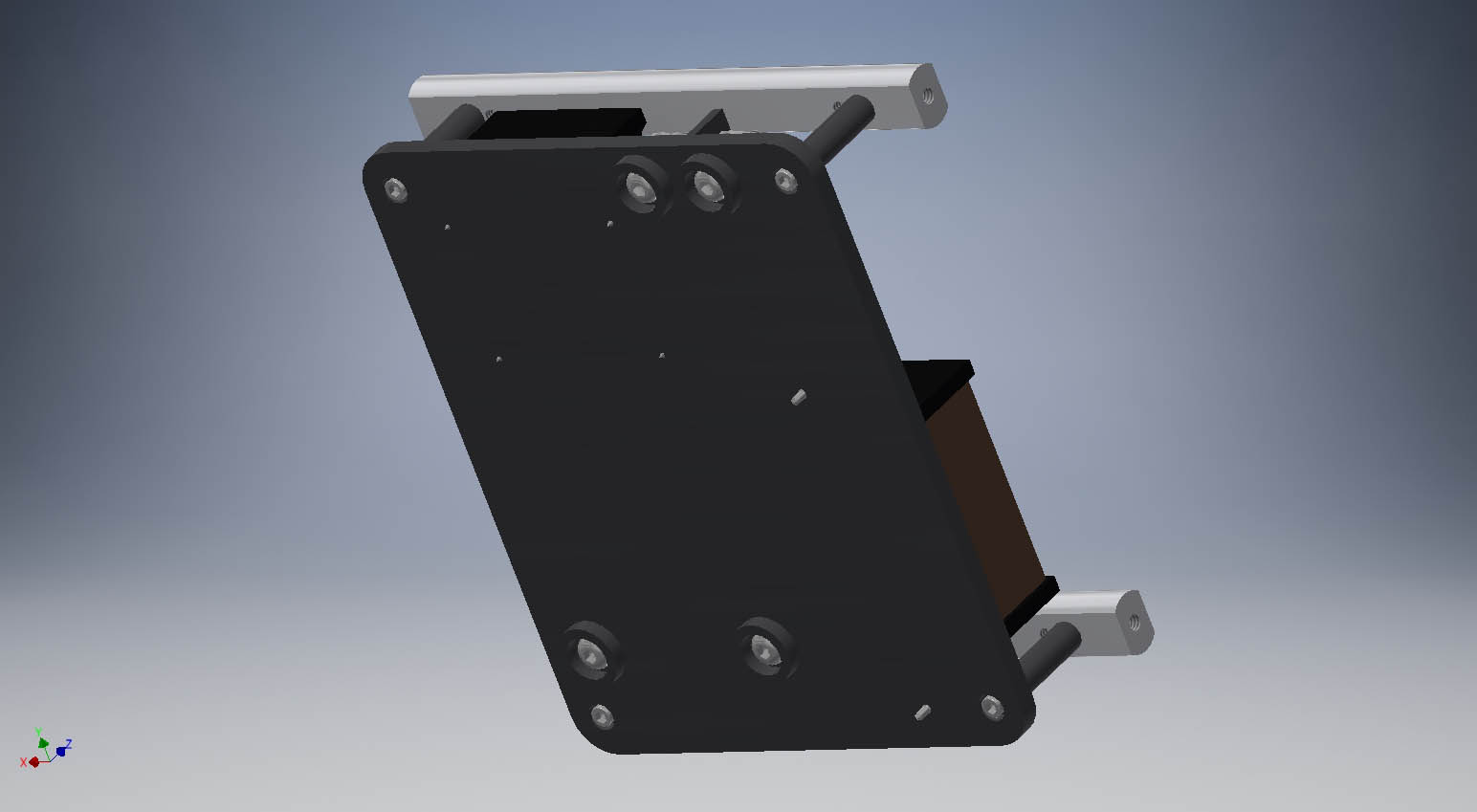
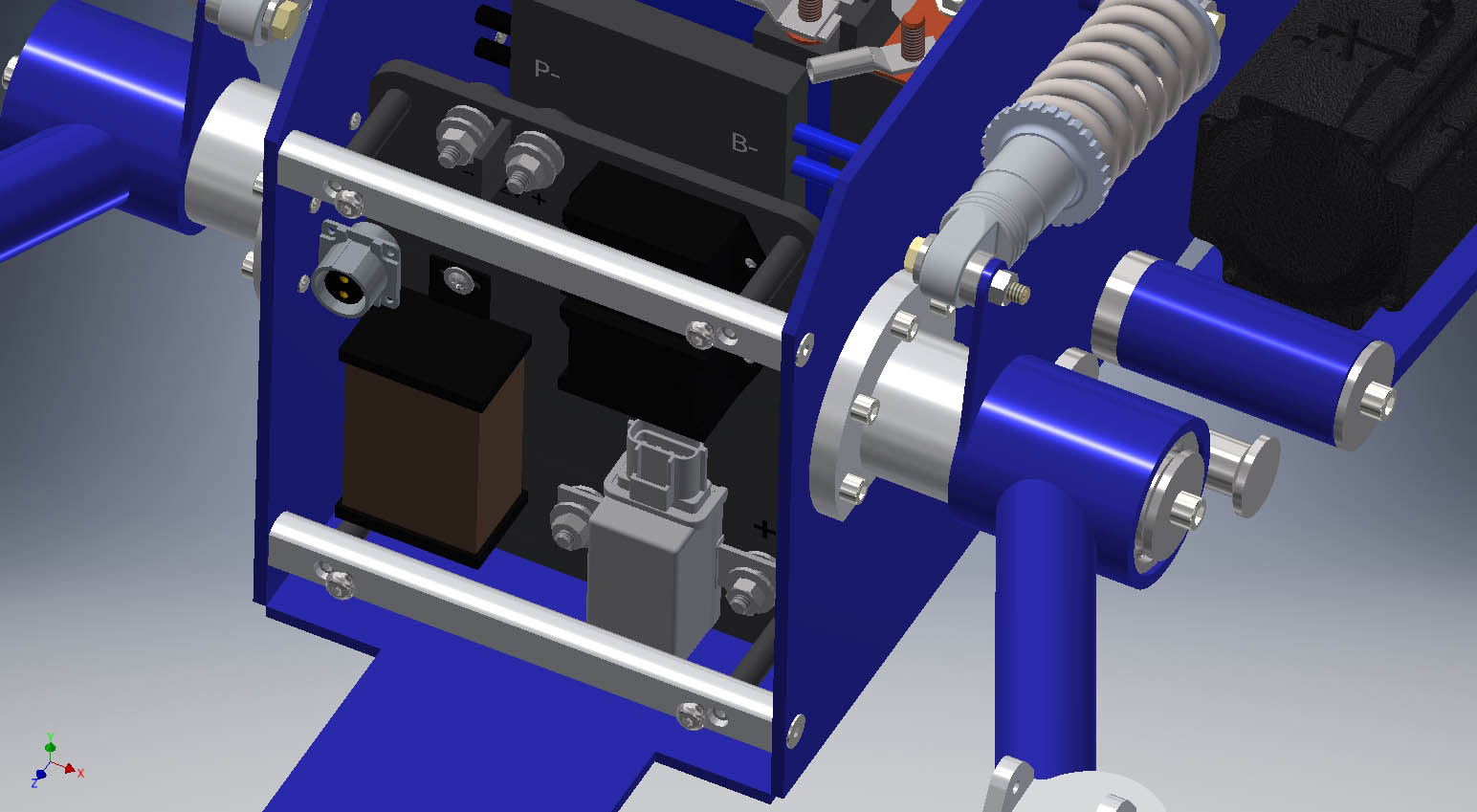
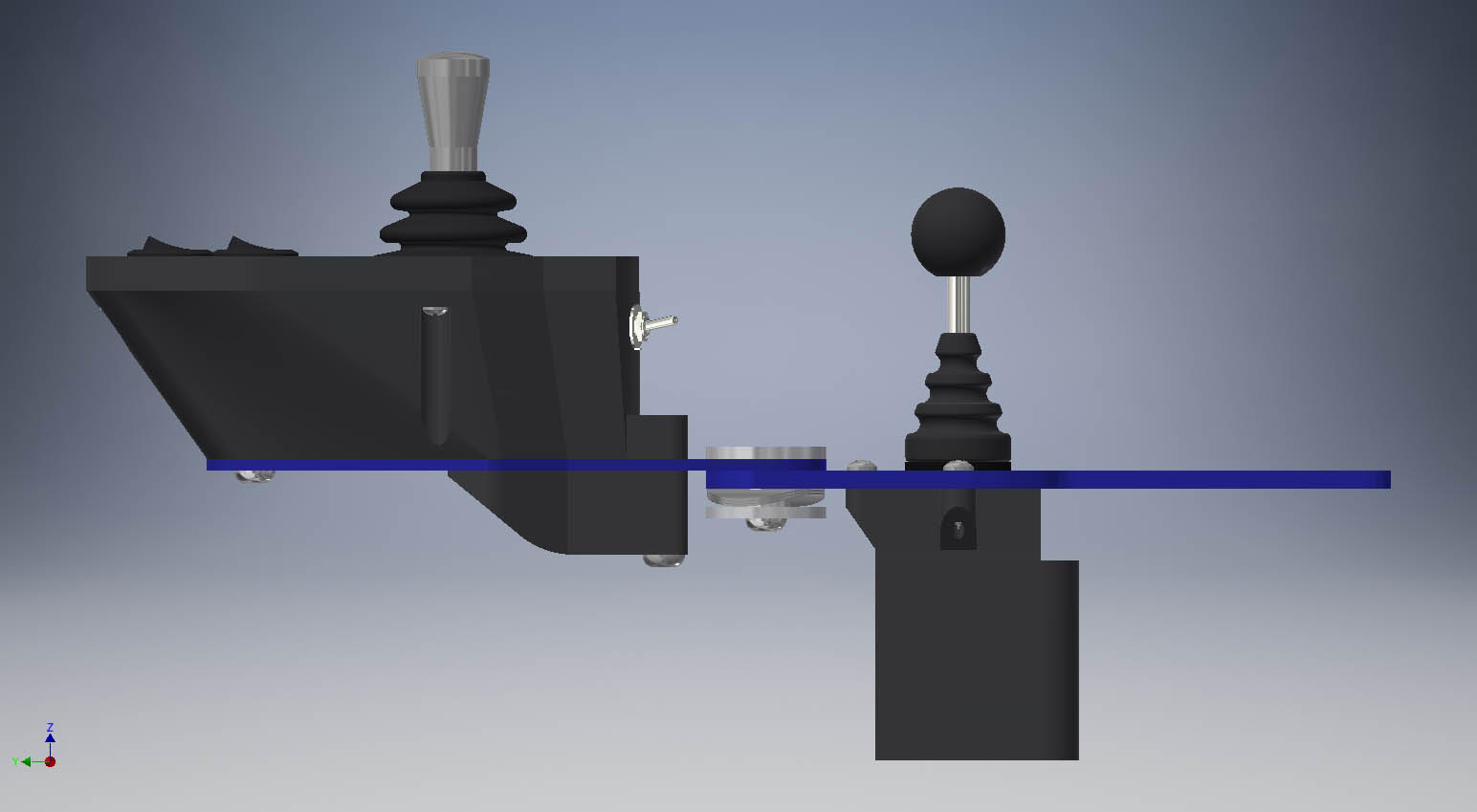
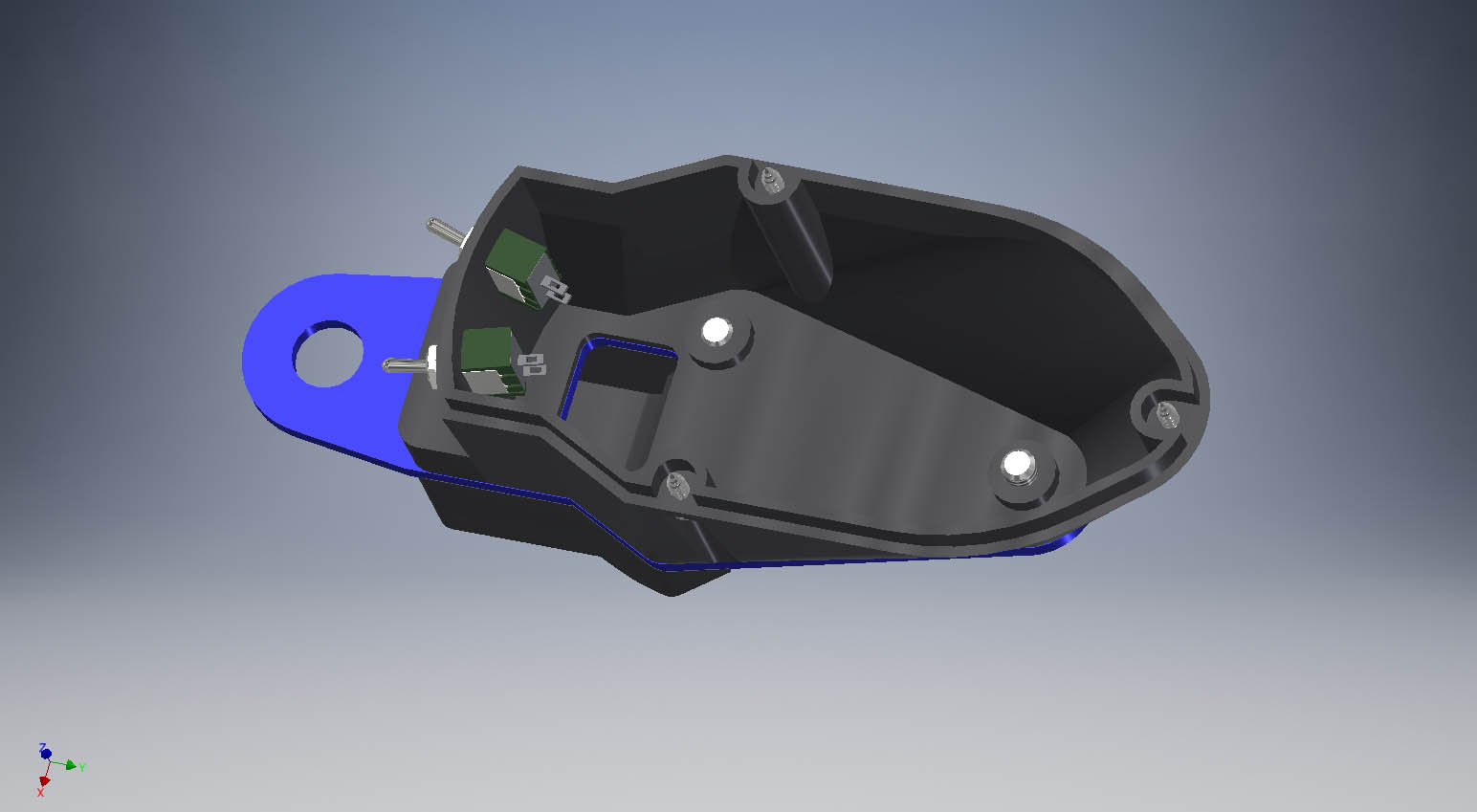
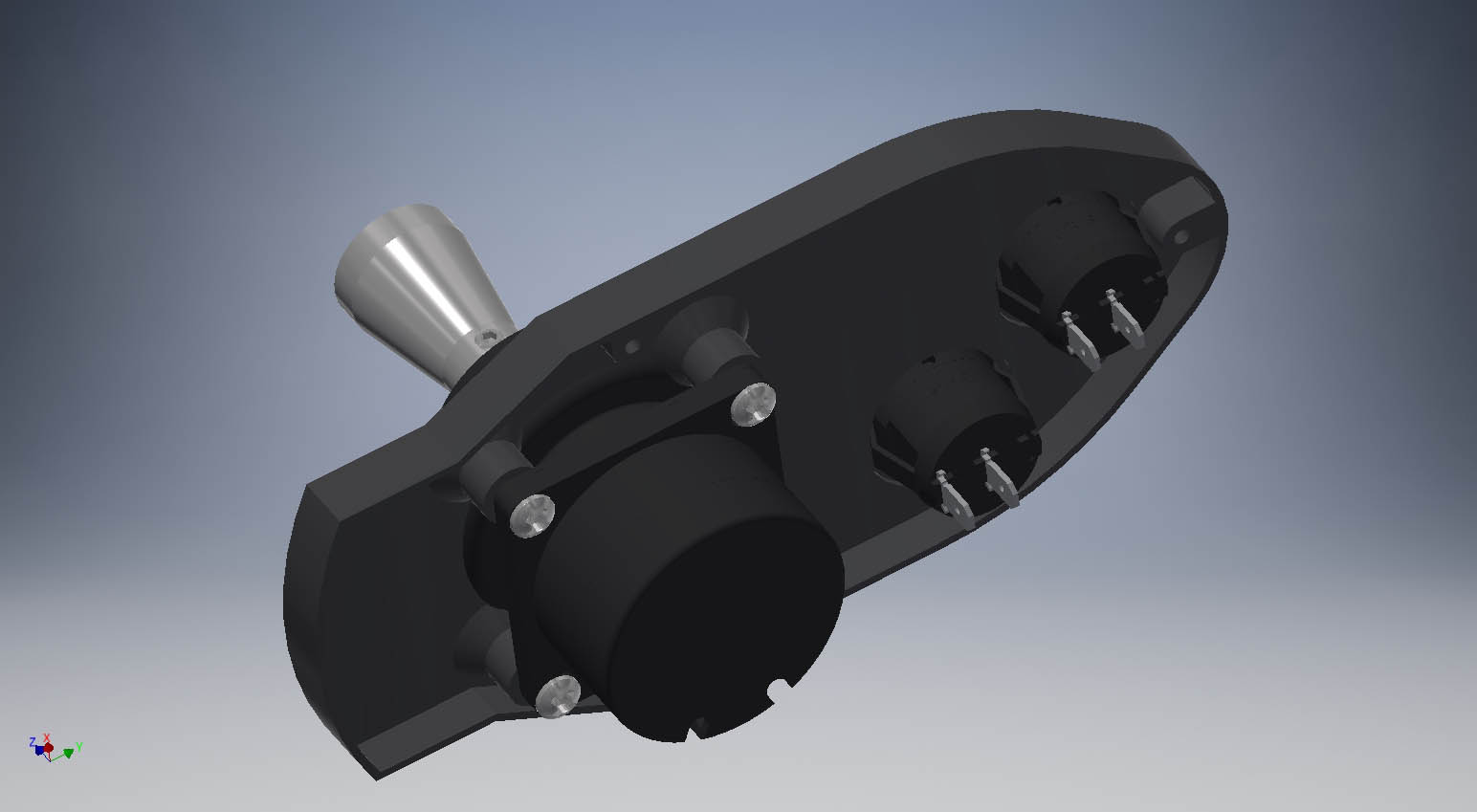
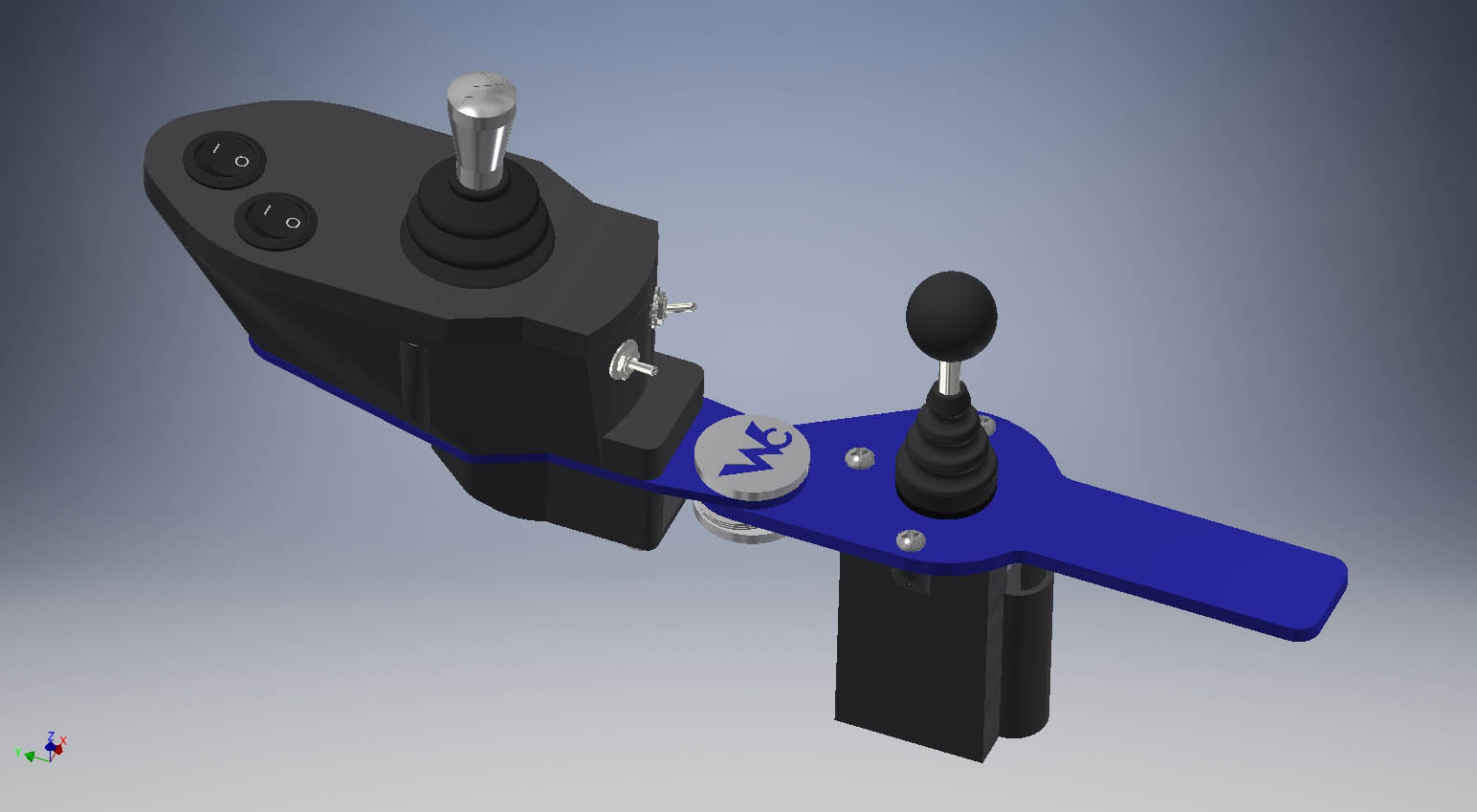
The joystick housing looks empty without the mess of wires that that there in real life. One thing that does not match what was actually used is the front rocker switch. The real chair uses a single pole double throw momentary switch for the master/emergency kill switch. The two in the model are both single pole single throw latched rocker switches. The dimensions are identical though.
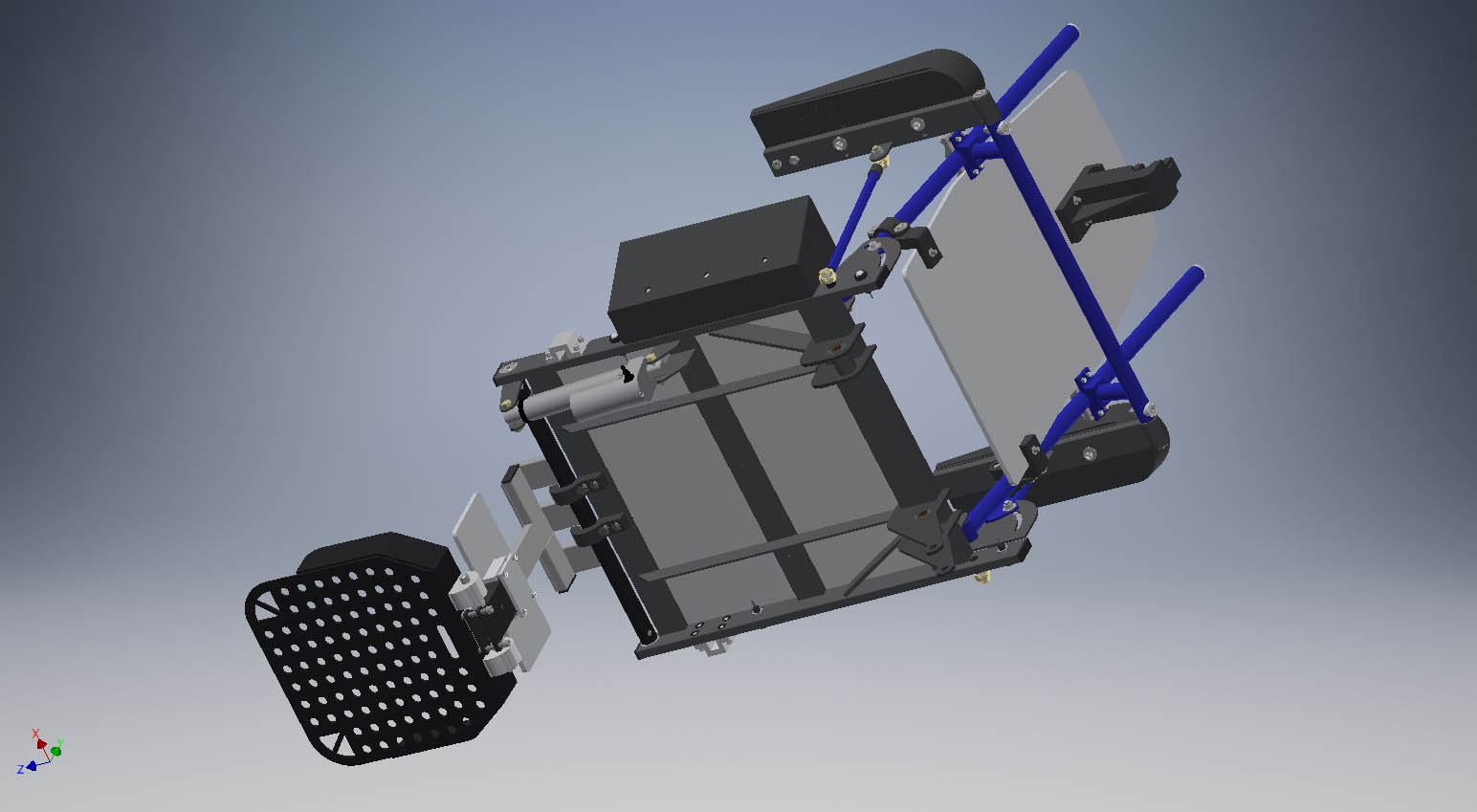
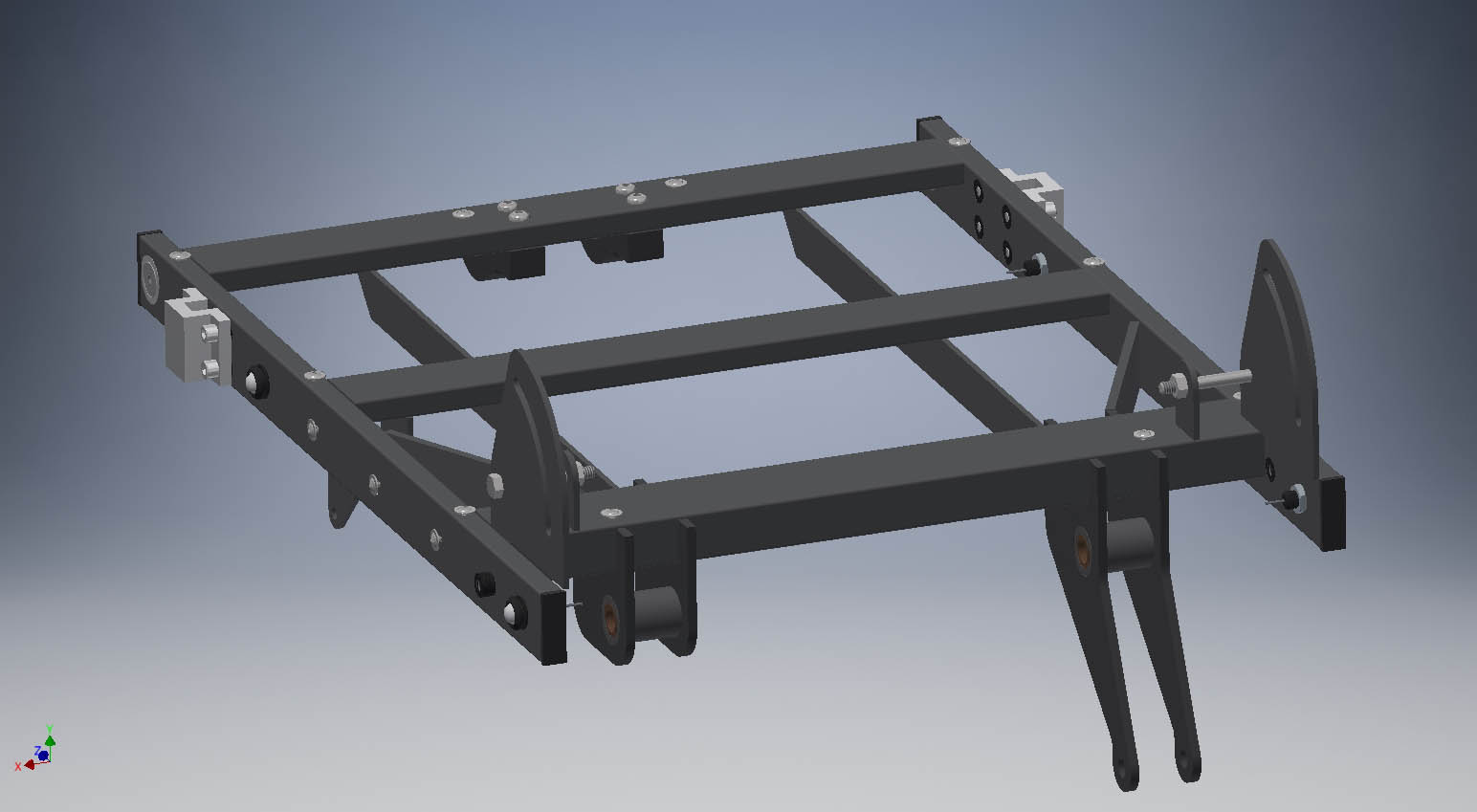
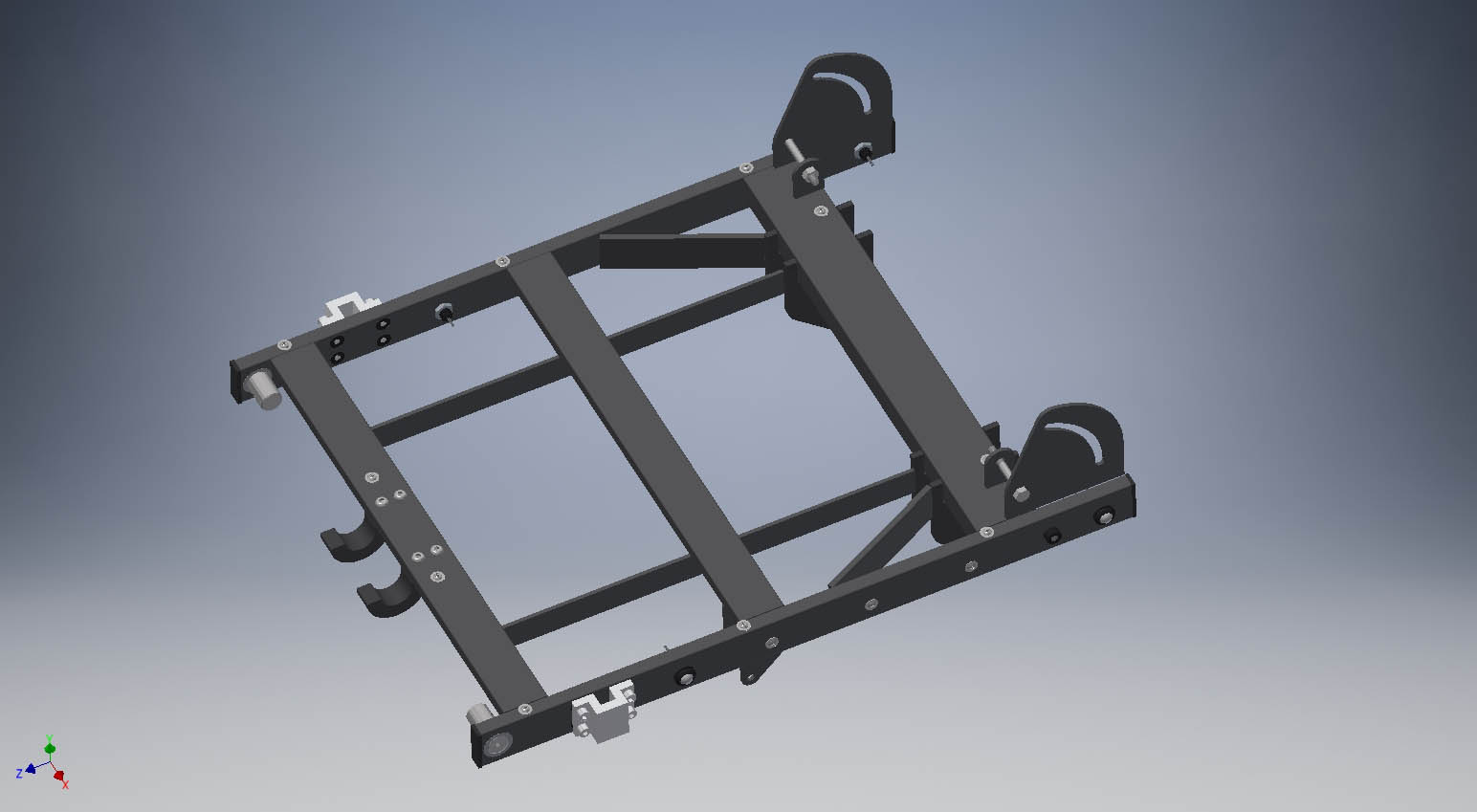
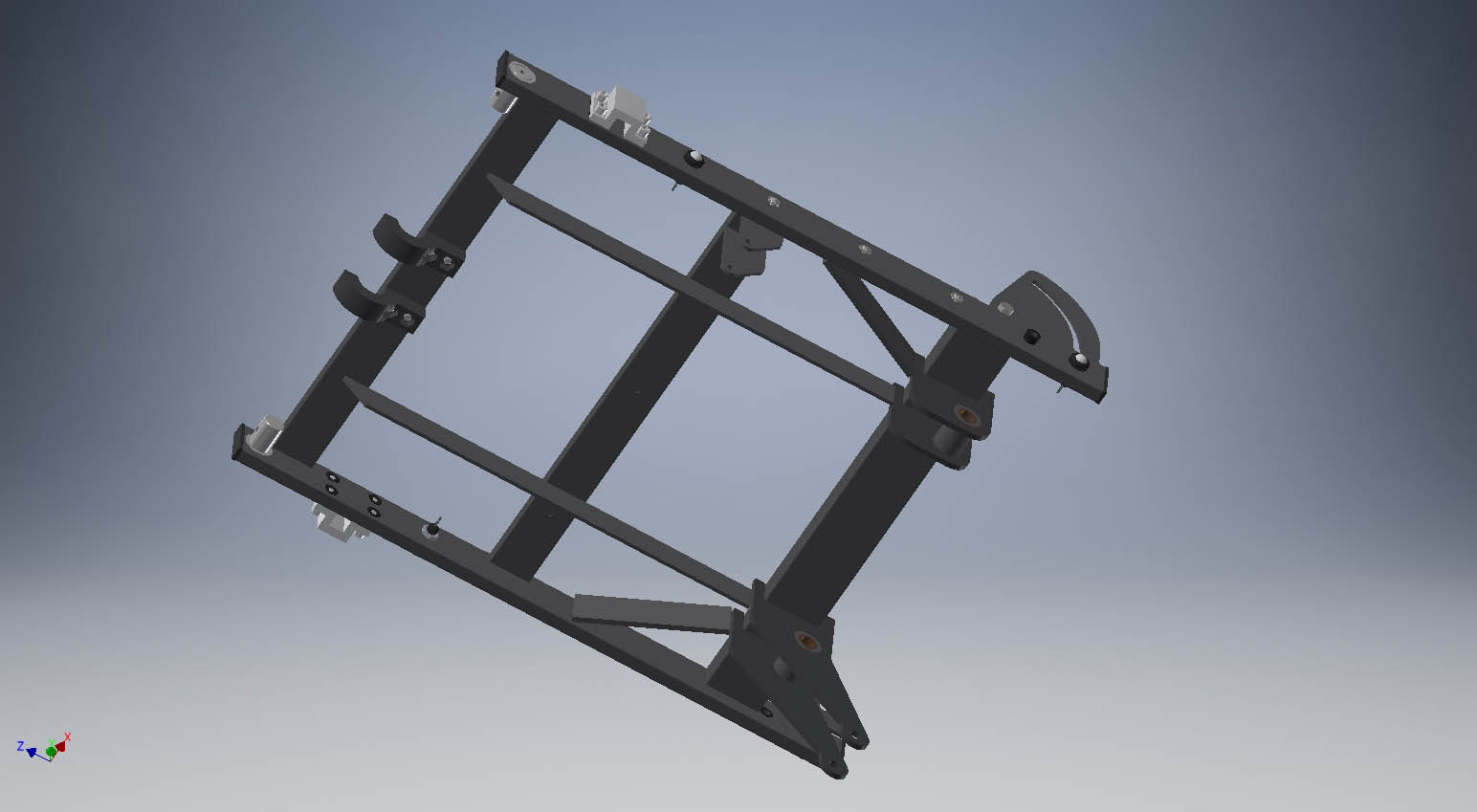
It would have been much more difficult to get the angle and relationship of the swingarm mounts and caster barrels correct without CAD first. It still took a bit of guesstimating to assure the caster barrels were straight up because it can vary with tire pressure and suspension sag settings.
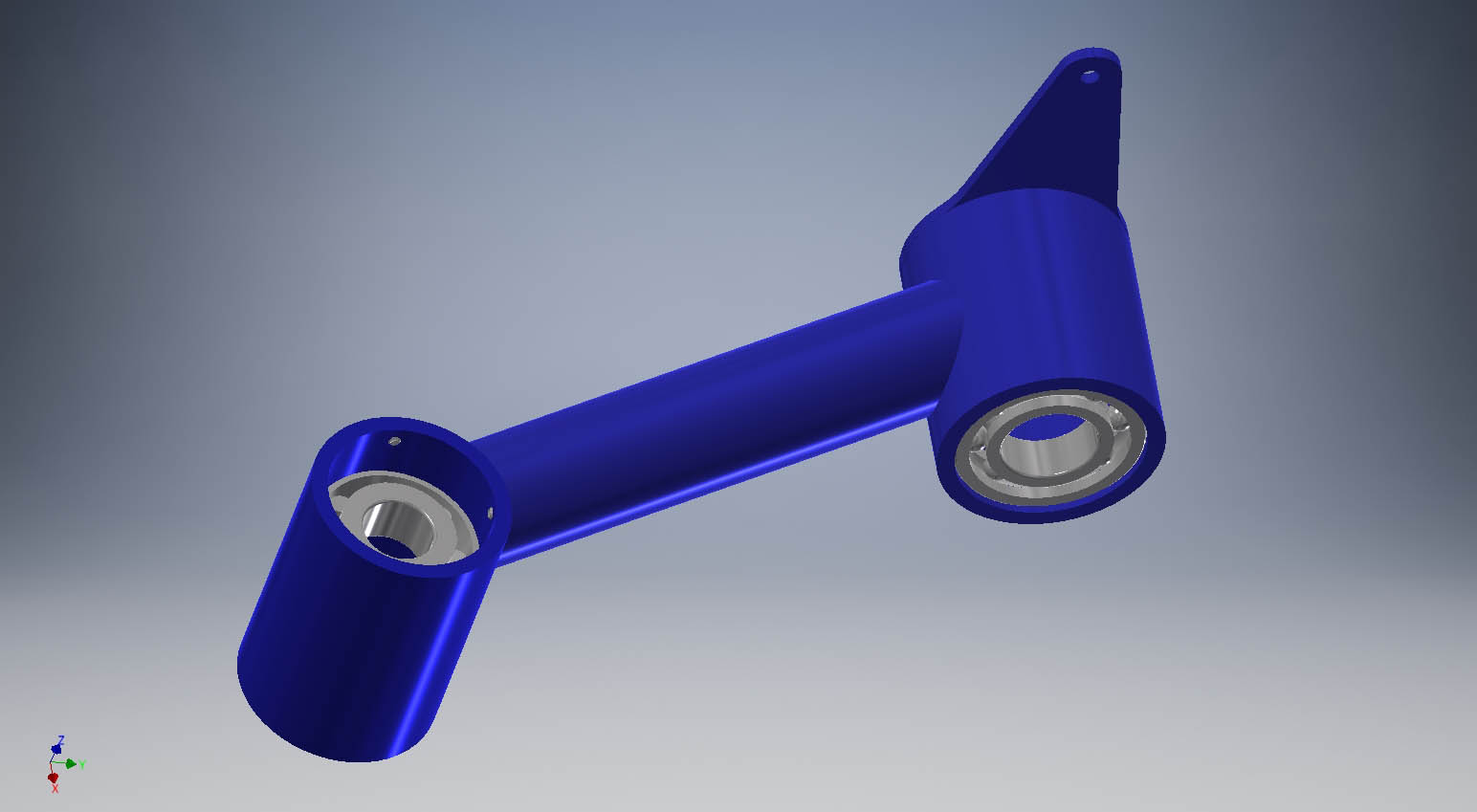
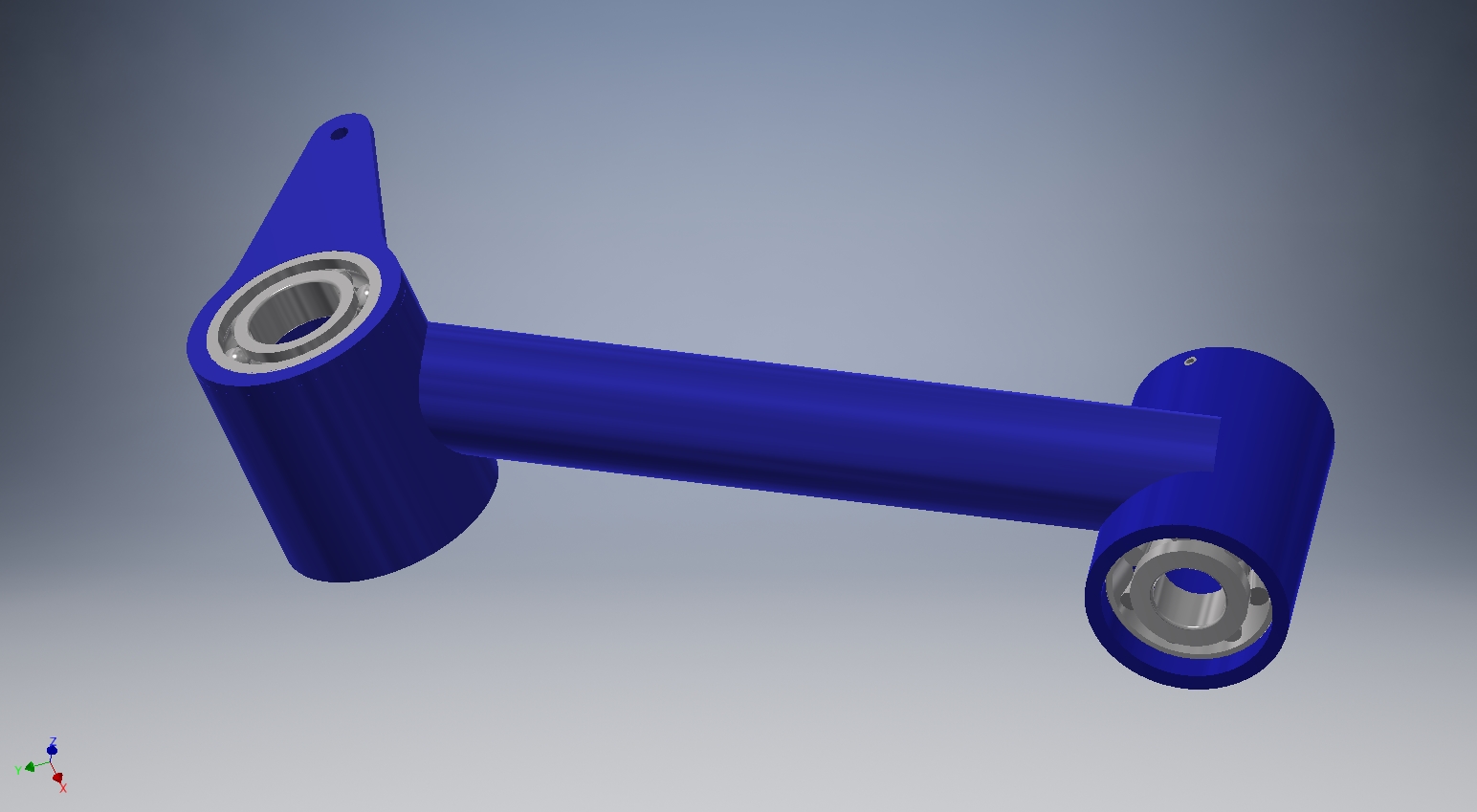
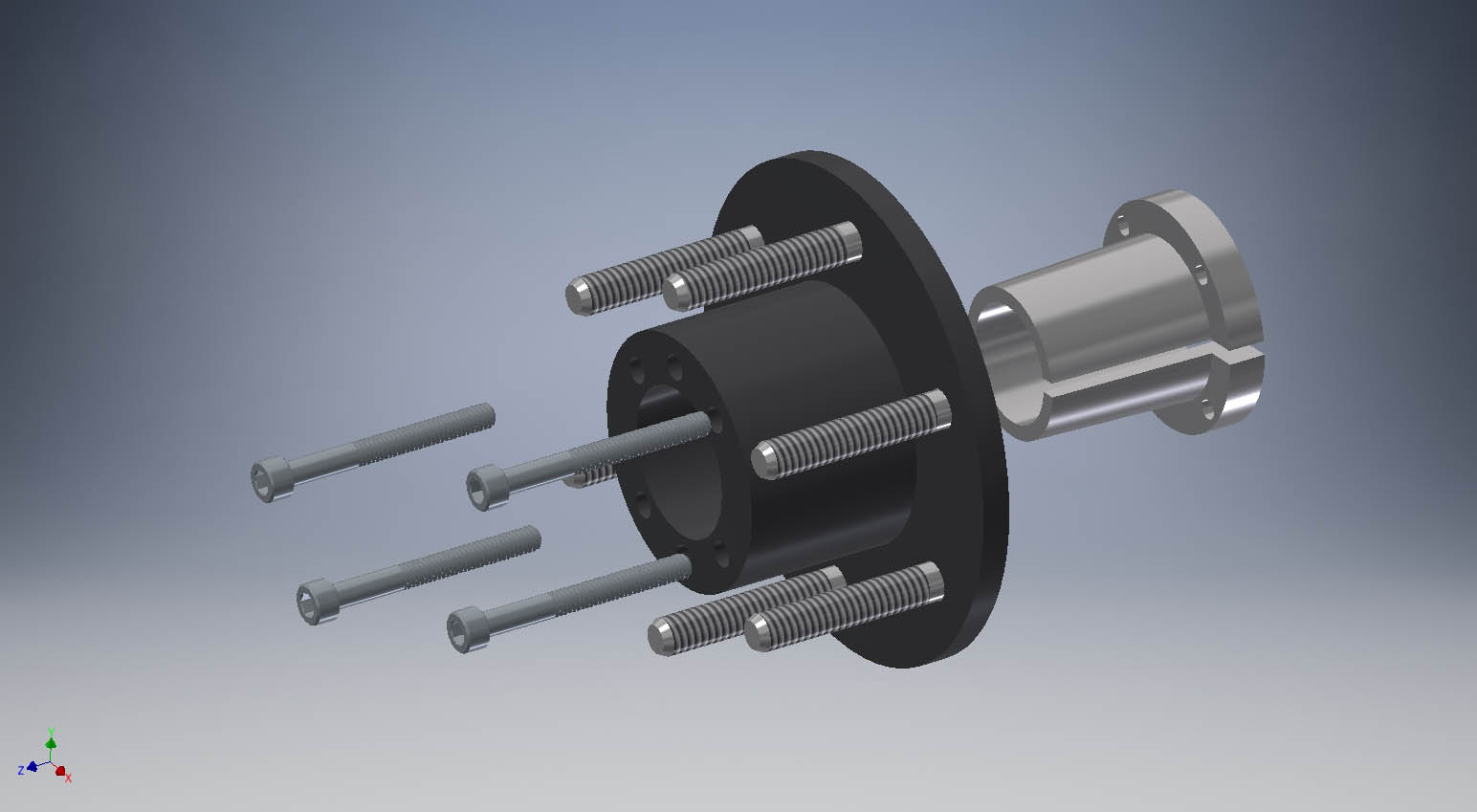
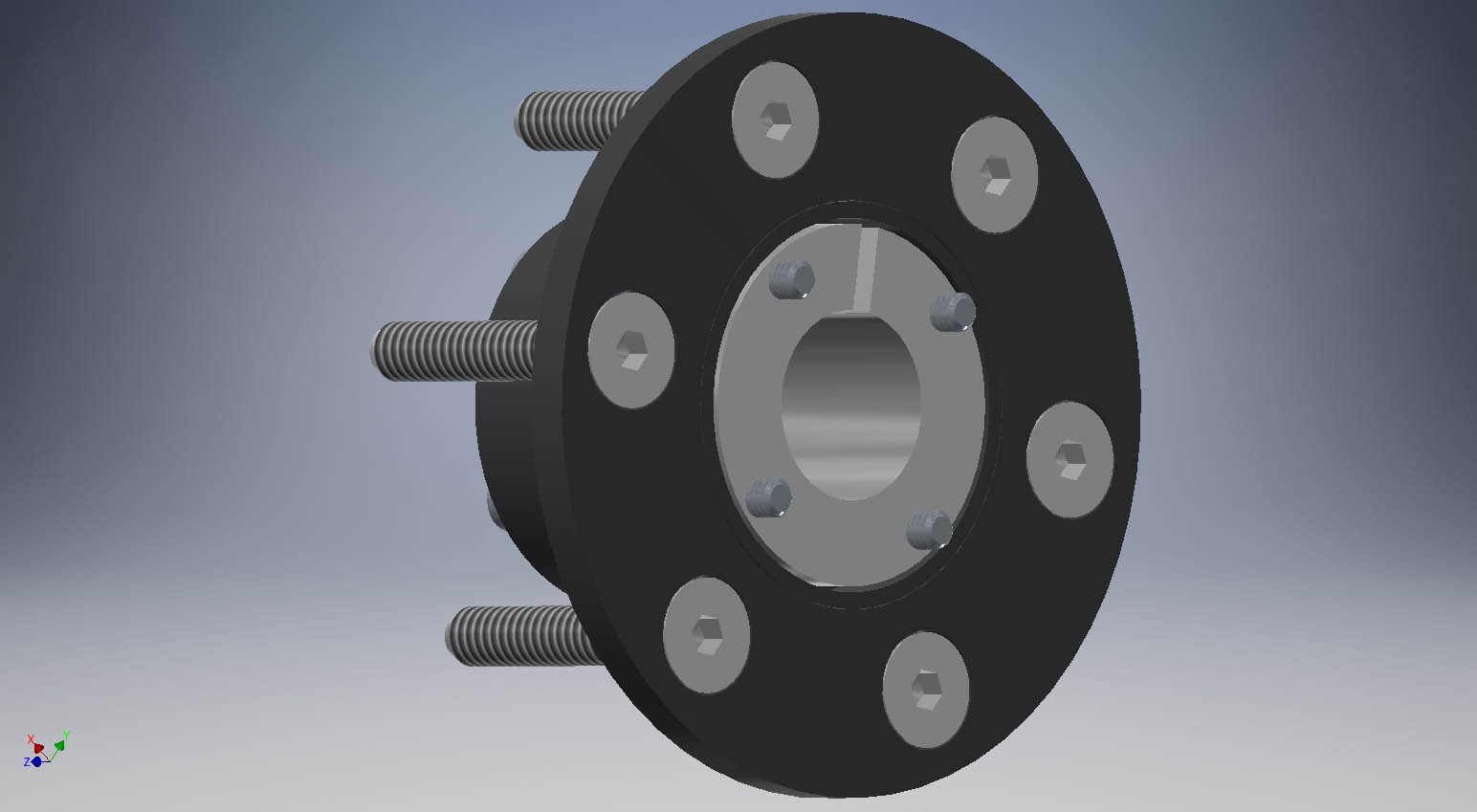
This is how the taperlock hubs go together
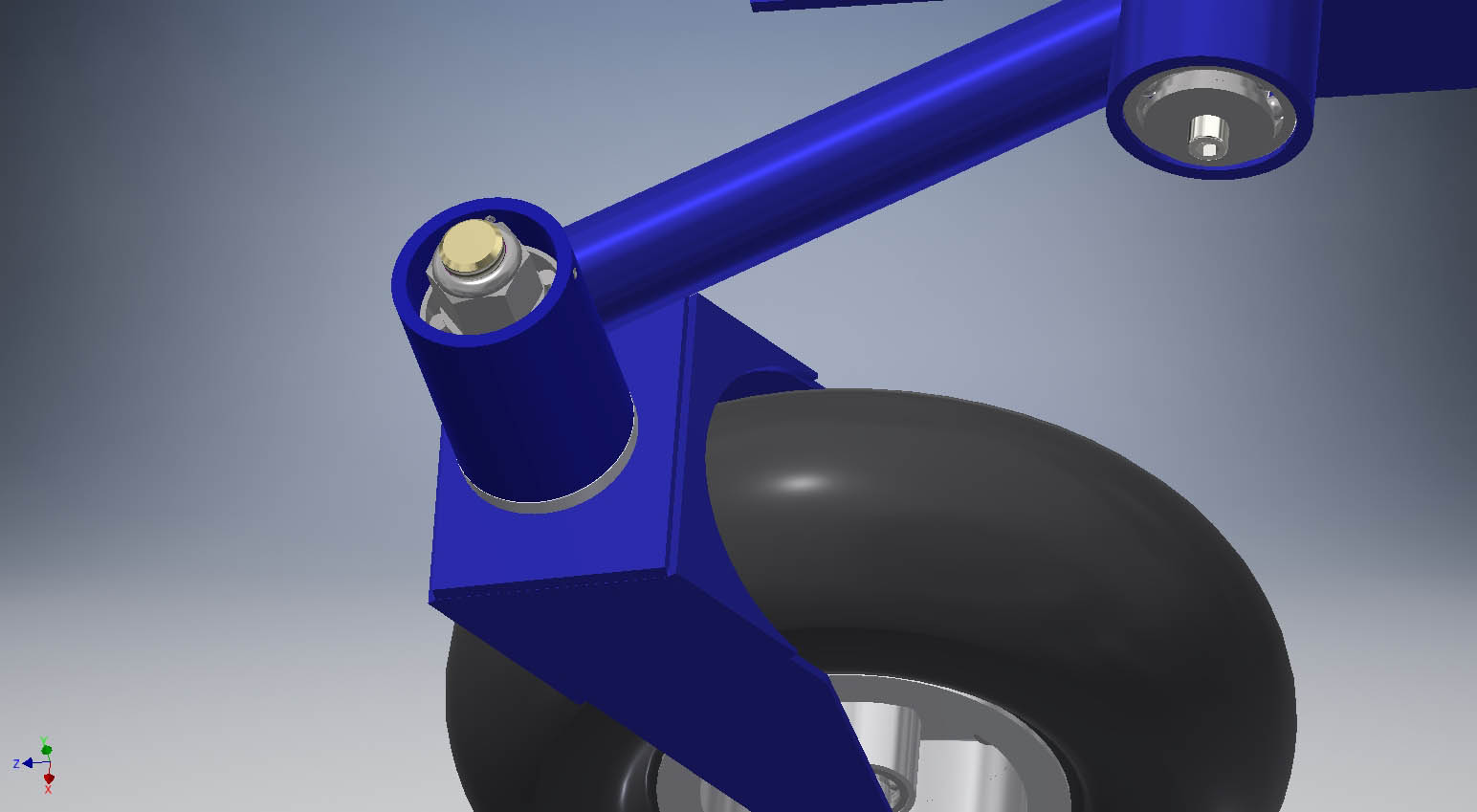
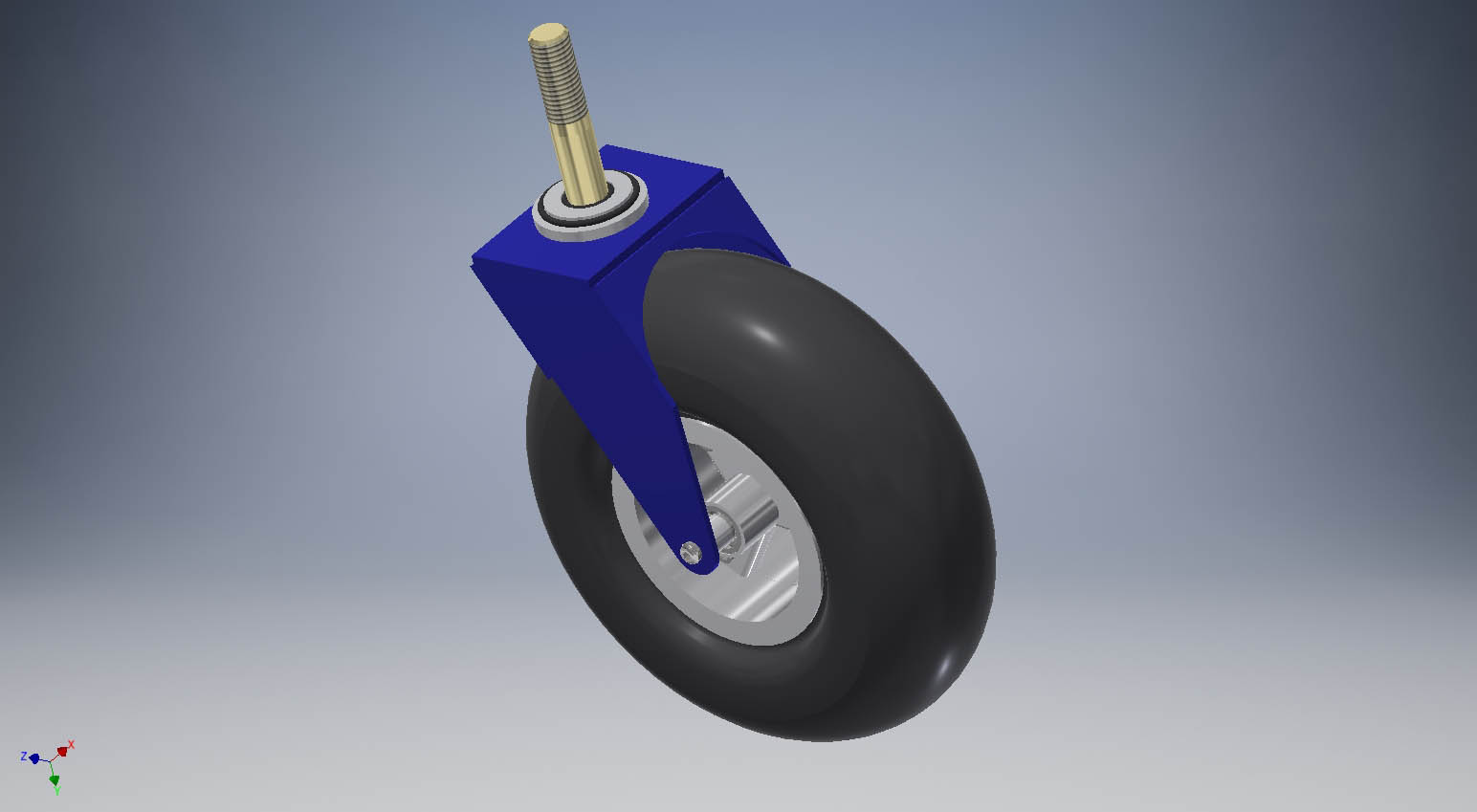
The caster forks use a pair of 3/4" id tapered roller bearings like in a truck axle. They take a beating. Standard roller bearings do not last. These also have a slight amount of preload applied to help reduce caster shake at speed. The bottom has an O ring seal to help keep water out
Follow along to the hardware build page to see how many of these parts came to life.